











![Guide to Marketing in China: Trends, Strategies, Rules [2026]](https://mates-asia.com/wp-content/uploads/2026/02/guide-to-marketing-in-china-1024x533.png)


«To know one's steps is to master the Way.
Yet, Cookies shall light the road. Please, decide which marks shall remain.»
China SERM Services for International Brands
- Managing search engine reputation through SEO and PR technologies
- Overcoming language and cultural barriers
- Compiling and implementing a relevant keyword list
- Enhancing brand visibility in the Chinese media space
- Managing Chinese social media and search engine integration
DIGITAL REPUTATION IS ONE OF THE SUCCESS FACTORS FOR ANY BUSINESS. THIS IS ESPECIALLY IMPORTANT FOR INTERNATIONAL COMPANIES IN THE CHINESE MARKET.
TO SUCCESSFULLY PROMOTE A BUSINESS IN CHINA, IT IS NECESSARY NOT ONLY TO UNDERSTAND THE SPECIFICS OF THIS MARKET BUT ALSO TO BE ABLE TO MANAGE YOUR REPUTATION IN SEARCH ENGINES. IN THIS ARTICLE, WE WILL LOOK AT HOW USING SERM (SEARCH ENGINE REPUTATION MANAGEMENT) CAN HELP BUSINESSES BUILD TRUST IN THE CHINESE MARKET.
REPUTATION MANAGEMENT (SERM) FORMATS IN CHINA
-
SERM (Search Engine Reputation Management)
Managing reputation in search engines, a tool at the intersection of SEO and PR technologies.
-
ORM (Online Reputation Management)
Managing reputation online in general. This tool includes SERM and work with other platforms: forums, social networks, blogs, and media.
-
HM (Hidden Marketing)
Hidden Marketing. The essence of this tool is that influence agents—fictional users—initiate discussions, compare goods, services, or companies, share «personal experiences» and recommendations, thus creating a positive reputational background. These users are typically specialists from the agency handling the company’s business reputation.
Understanding the Chinese Market
The Chinese market is one of the most dynamic and competitive in the world. It also has its own specifics related to cultural, linguistic, and legal aspects. To successfully engage with Chinese consumers, it is necessary not only to speak their language but also to understand their preferences and values. Furthermore, the Chinese market has its own search engines, such as Baidu, which differ from Western counterparts like Google.
The Role of SERM in China
SERM (Search Engine Reputation Management) is a strategy for managing reputation in search engines. In the context of the Chinese market, SERM becomes an even more important tool, as Chinese consumers actively use search engines to obtain information about companies and products. SERM allows you to control and manage the information users see in search results, thereby creating a positive impression of your company and strengthening trust in it.
From Challenges to Opportunities: Implementing SERM in China
Implementing SERM in China can present certain challenges related to language and cultural barriers, as well as the specifics of Chinese search engines. However, these challenges also provide new opportunities for companies willing to invest in managing their reputation and building trust in the Chinese market.
One SERM strategy in China is the active use of keywords related to your brand or product within the context of the Chinese market. This will help improve your brand’s visibility in search engines and control the information users see when searching.
COMPANY A
Specializes in the production of organic products. Company A launched a SERM campaign that actively used keywords related to organic food and a healthy lifestyle. Thanks to this campaign, Company A was able to increase its brand visibility in search engines and attract new customers.
COMPANY B
Operates in the tourism sector. Company B implemented a SERM campaign that actively used reviews and recommendations from its clients. Thanks to this campaign, Company B was able to strengthen its reputation and create a positive impression of its services in the Chinese market, increasing both sales volume and the average transaction value.
Launch with Mates Asia
Our team is ready to consult you!
KEY ASPECTS OF BUILDING REPUTATION IN CHINA
-
Use keywords related to your brand and product when creating social media posts.
-
Actively participate in social networks and forums that allow you to interact with Chinese consumers and answer their questions and comments.
-
Create positive content that will be visible in search results and help strengthen trust in your company.
-
Monitor your reputation in search engines and respond to negative reviews or news promptly.
TOOLS AND RESOURCES FOR SERM MANAGEMENT IN CHINA
There are many tools and resources available to help you manage your SERM in China. Here are some of them:
-
Baidu SERM
This is a specialized tool from Baidu that allows you to manage your reputation in the Baidu search engine.
-
Social Networks in China
Platforms such as WeChat and Weibo offer opportunities to engage with Chinese consumers and create positive content about your company.
-
Review and Rating Management Platforms
Platforms like Dianping can help you monitor and improve your reputation through user reviews.
SERM POTENTIAL
SERM has enormous potential for building trust in the Chinese market. However, to successfully implement SERM in China, it is necessary to consider the specifics of this market and use appropriate strategies and tools. Given the rapid development of China’s digital economy and the growing number of internet users in China, SERM is becoming an increasingly important tool for international companies looking to succeed in the Chinese market.
CASES
Royal Tennis Club

- Growth & Performance Highlights Follower growth of 95% (+113 new followers) driven by organic promotion.
- 182% increase in views (reaching 6K+) and 219% increase in watch time.
- Engagement boost: Likes grew by 319%, and post saves increased by 35%.
- Services Provided: LITTLE RED BOOK (Xiaohongshu/RED)
What we did:
View case
- Little Red Book
DR.SEA

- Brand Launch from Scratch: Complete registration and verification on WeChat and Douyin in one month.
- Viral Content Success: The Labubu video achieved high organic reach and subscriber growth without an advertising budget.
- Localized Content: Four localized WeChat articles published, demonstrating high readership and engagement.
- Strategic Foundation: A comprehensive Douyin video promotion strategy developed based on competitor and trend analysis.
What we did:
View case
- Douyin

UTLC

- Analysis of the current state of the B2B logistics market on the China-Europe route.
- Identification of key market players and their market share.
- Analysis of target audience needs, preferences, and behavioral specifics.
- Turnkey WeChat Management.
- Baidu PPC (Pay-Per-Click) Advertising Launch and Lead Generation.
What we did:
View case
- Market Research in China
- Baidu

Positive Technologies

- The Baidu advertising campaign generated 34 leads in the first month, 6 of which were qualified.
- The CTR (Click-Through Rate) exceeded planned targets by 44%.
- The CPL (Cost Per Lead) was 83.5% below the planned cost, which allowed for budget optimization and increased profitability (ROI).
What we did:
View case
- Baidu
NEWS
AND OPINIONS
At the XI Eastern Economic Forum, the Far East and Arctic Development Corporation and the digital marketing agency Mates Asia signed an agreement on the direct export of Russian Far Eastern content to China. As part of this partnership, at least five multimedia products created by the creative industries of the Far Eastern Federal District are slated for introduction to the Chinese market.
In March 2026, Douyin passed 1 billion monthly active users inside mainland China alone — the first short-video platform in the country to cross that line. In 2025, its e-commerce arm generated an estimated ¥4.3–4.5 trillion in GMV, growing roughly 27–30% year over year. Those aren’t the numbers of an app. They’re the numbers of a national retail channel that happens to look like an entertainment feed.

21 / 08 / 2026
China AI Search Optimization Guide 2026: How to Rank in DeepSeek, Doubao, Baidu AI, Qwen & Kimi
By December 2025, China’s generative AI user base had reached 602 million people, and time spent inside AI apps was growing 176.7% year over year, according to QuestMobile. That is not an early-adopter curve anymore. It is how a majority of connected Chinese consumers now research products, compare suppliers, and decide who to trust — often before they ever type a keyword into Baidu’s classic search bar.

26 / 07 / 2026
JD.com Advertising & Selling Guide: How to Promote on China’s Premium Ecommerce Platform
China is home to the world’s largest ecommerce market, and JD.com (京东商城) has established itself as one of its most trusted online retail platforms. While many international brands initially think of Alibaba’s Tmall when entering China, JD.com has built a distinct competitive advantage through product authenticity, premium customer service, and one of the country’s фmost sophisticated logistics networks.
South Korea has one of the highest social media penetration rates in the world – over 90% of the population uses social platforms. It is a highly digital and solvent market. Brands enter it to increase sales. However, local platforms and consumer behaviour differ from what many international marketers are used to. Without understanding these differences, campaigns fail.
China’s payment landscape represents one of the most dramatic financial transformations in modern history. The country jumped directly from cash-based economy to mobile payment dominance, skipping the credit card era that defined Western payment evolution. Today, nearly 90% of Chinese consumers use digital wallets, creating a nearly cashless society where QR codes reign supreme.
Learn how to promote games in China and successfully enter the Chinese gaming industry. This guide covers the China video game market, mobile gaming trends, ISBN licensing, and effective marketing strategies. Discover how to release a game in China, navigate the Chinese gaming industry, and promote games to millions of players.
WeChat mini-app for travelers screenshots Xiaohongshu for travelers screenshots Douyin for travelers screenshots Ctrip for travelers screenshots from official account of platform
Eight out of ten Chinese internet users have bought a product through a live stream at least once. In 2024, the country’s livestream commerce market generated 4.5 trillion yuan in gross merchandise value, or GMV. Forecasts suggest it will surpass 1 trillion US dollars by 2026.
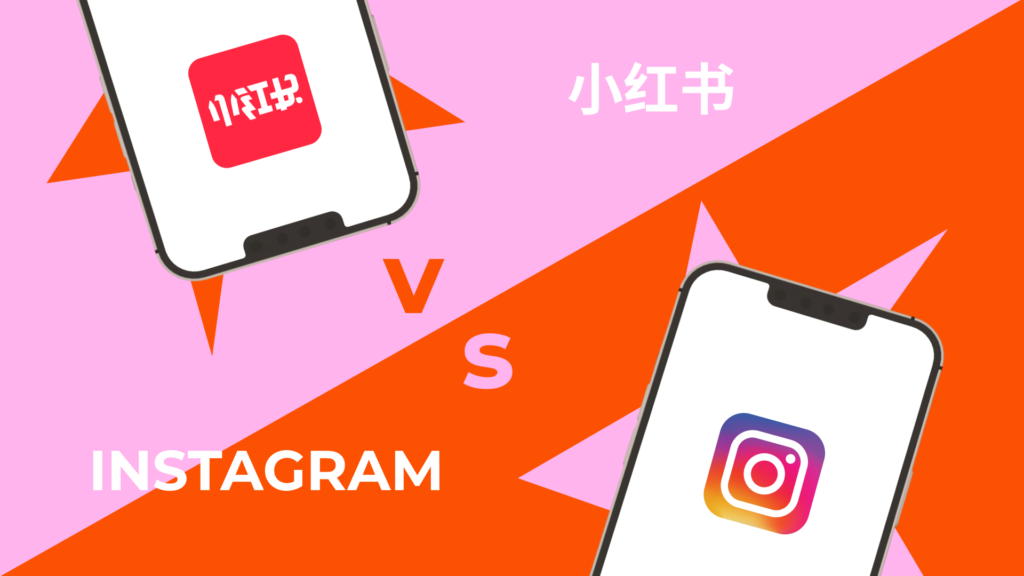
By 2026, the myth that Xiaohongshu is simply “the Chinese Instagram” has been completely shattered. Both platforms deal with visual content, but their inner workings, user behavior, and commercial potential have diverged so much that trying to apply a single strategy will burn your budget. These are no longer competitors — they are two different worlds, and brands need to choose where they want to win.

14 / 05 / 2026
Tmall Advertising Strategy: Full Guide to Promotion & Ads on China’s Top Ecommerce Platform
If you want to grow sales in China, Tmall is often not just “another channel”, but the core revenue engine inside Alibaba’s ecosystem. Shoppers come to Tmall with clear purchase intent, search for specific brands or categories, compare options, and convert directly on the platform. That makes your Tmall marketing strategy a mix of brand building, conversion optimization, and performance advertising rather than simple “store listing”.
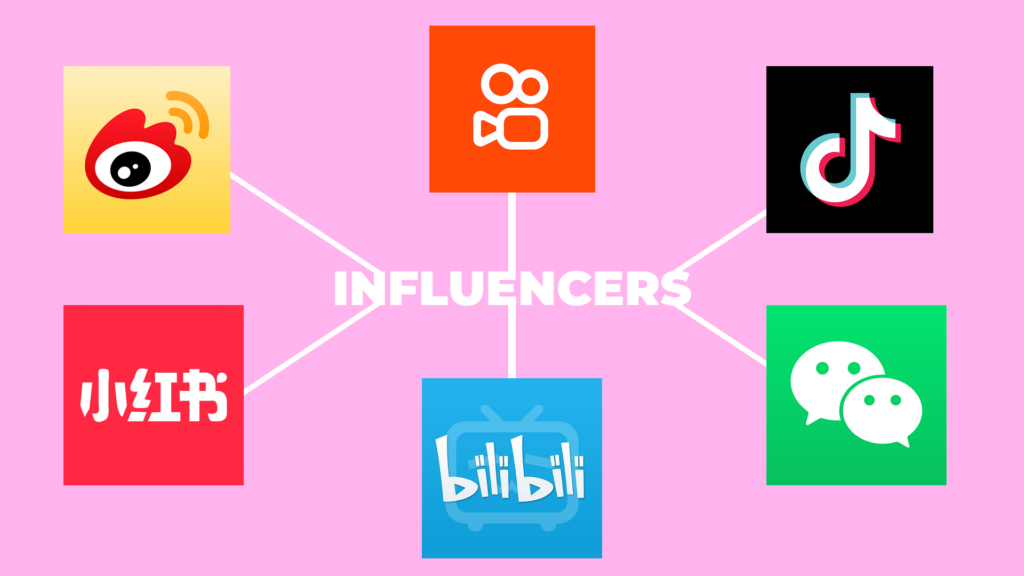
The Chinese market offers massive opportunities for brands, but you don’t necessarily need a celebrity budget to break in. The secret is working with micro- and nano-influencers. Locally, they are known as KOCs—Key Opinion Consumers. These aren’t polished public experts. Their whole appeal is that they look and sound like real people. Their followers treat them like friends, not advertisers.

06 / 05 / 2026
Zhihu Marketing Guide: What is Zhihu? Chinese Q&A Platform Marketing Strategy for Brands & Companies
If you are planning to promote your brand in China, you probably already know the big names: WeChat, Douyin, RedNote, Baidu and Weibo. But there is one platform many international companies still underestimate, even though it can quietly shape brand trust long before a customer is ready to buy — and that platform is Zhihu (知乎).
More than 800 million people browse Taobao every single month. Most sellers never reach the first page of search results unless they pay for ads. This is a fact.
China is not a new market for your existing product. China is a different universe. There is no Google Play, no Facebook, no Instagram, and no Twitter. Instead, you face hundreds of Android stores, a censorship system that rejects apps for reasons you have never heard of, and payment systems that require deep local integration.
China is a separate digital market. As we move through 2026, the rules of engagement have shifted again. The era of simply hiring a celebrity with millions of followers is fading. Today, success belongs to brands that master the delicate ecosystem of Key Opinion Leaders (KOLs) , Key Opinion Consumers (KOCs) , and emerging Cultural Opinion Leaders (COLs) .
If you are thinking about expanding your business opportunities and have turned your attention to the rapidly developing China, then sooner or later you will encounter such a digital giant as Baidu.

30 / 03 / 2026
Xiaohongshu and Douyin: A Guide for Brands Entering China’s Cross-Border E-Commerce Market
Brands entering China’s cross—border e—commerce market often ask the same question: are Douyin and Xiaohongshu the same?
The Chinese Internet is often compared to a separate universe. It operates by its own rules, features its own platforms, and follows a distinct logic of consumer behaviour. While in the West the path to purchase often begins with Amazon or Google, in China things are both more complex and, at the same time, more structured.
What is Bilibili (哔哩哔哩)? Is Bilibili Like YouTube? Is Bilibili still popular in China? Bilibili vs YouTube: 7 Major Differences You Should Know 1. Market Size and User Base 2. Local Competition 3. Niche Focus 4. Community Building and User Engagement 5. Content Quality 6. Search and Discovery Algorithms […]
Mini Programs menu interface/ Mini Programs of Printer/ Uniqlo Mini Program CASE 1: Swisse (supplements) WeChat Mini Program
This comprehensive Xiaohongshu guide and overview explores the fundamentals of marketing on the platform. Recently, a new term has emerged globally, prompting questions such as what is Rednote app and what is Rednote. To clarify the most popular hesitation, is Rednote Xiaohongshu? Yes, they are the exact same platform. Whether it is referred to as […]
Expanding into the Chinese market can be highly rewarding, but it requires careful planning. By following best practices for digital marketing in China, businesses can save time and resources, potentially conserving tens of thousands of dollars while setting themselves up for a successful market entry. China’s media landscape is governed by strict advertising regulations designed […]
Registering an Account with the Baidu Search Engine Baidu’s Official Website Search Results Page Structure Brand Zone in Baidu
Reserved Advertisement Formats on Bilibili
Got a question?
We will help your business enter China.
Send a request and we will provide a consultation!
Send a request and we will provide a consultation!