

Currently, one in five tourists worldwide is Chinese – and they spend several times more on travel than the average holidaymaker. And 2026 is the year this wave will surge to a whole new level. Chinese travellers have become a formidable economic engine, redrawing the map of global tourism – and they can no longer be treated as an afterthought. If your business still believes that a machine‑translated menu, a couple of flags in the hotel lobby, and a Baidu ad campaign are enough – you’ve already lost to those who are building a systematic, serious strategy for this market.
The biggest mistake many brands still make is treating Chinese tourists as a single, uniform audience. That market is too large, too digital, and too segmented for that approach to work. A first-time family traveler, a young couple planning a short luxury break, and a repeat visitor looking for a premium city experience all want different things.
Why Chinese tourists matter in 2026
Chinese outbound tourism is a giant market, and in 2026 it will keep growing. Projections put the number of overseas trips from mainland China at 165–175 million. These are numbers that hotels, airlines, retailers, and tour operators simply cannot afford to ignore. But it’s not just about the volume. It’s about how much each traveler spends: hotel nights, upgrades, shopping, tours, transfers, repeat visits. According to China Trading Desk data for 2025, 28% of Chinese tourists plan to budget more than 50,000 yuan (about US$6,900) per trip, significantly higher than the average traveler’s spending.
That’s why the smartest players are no longer asking: «How do we bring in Chinese tourists?». Their question is different: «How do we capture the largest share of their wallet?». This means the entire journey — from the first click of booking to that post-trip social media post — needs to work as one seamless system. Get it right, and you won’t just attract tourists — you’ll build an engine of compounding demand.
What has changed
The Chinese traveler of 2026 is different from the pre-pandemic stereotype. They are more digitally self-directed, more selective, and more willing to compare options across multiple platforms before making a decision. They also expect a higher level of convenience. If a booking flow is confusing, if payment is awkward, or if the product does not feel clearly relevant, they move on quickly.
At the same time, the market has become more premium in important ways. Many Chinese travelers are trading up when the experience feels worth it, especially for superior rooms, curated experiences, and trips that make social or emotional sense. That does not mean everyone is luxury-focused; it means “good value” increasingly means “worth paying more for if the friction is low and the quality is obvious.”
How do they discover you
Chinese tourists rarely follow the same path as Western travelers. They do not necessarily start with a search engine or a hotel website. Discovery often happens in a network of apps, social platforms, travel OTAs, creator content, and peer recommendations. If your brand only exists in one of those places, you are leaving most of the market untouched.
The most important discovery channels are usually WeChat, Xiaohongshu, Douyin, Trip.com, and other China-native or China-familiar platforms. These are not just awareness channels; they are decision environments.
WeChat serves as the connective tissue of the entire journey. Through its mini-program ecosystem, users can discover, compare, and book travel services without ever leaving the app. It is where brands build ongoing relationships — through official accounts, customer service, and loyalty programs — turning one-time bookers into repeat travelers.

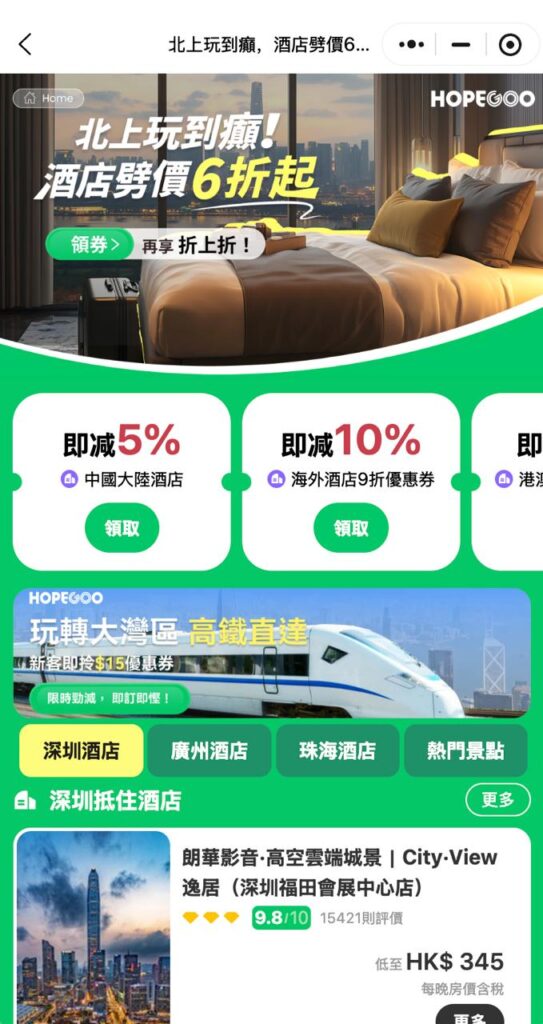

WeChat mini-app for travelers screenshots
Xiaohongshu
Xiaohongshu (RedNote) is the research engine for travel planning. With over 230 million monthly active users and 80% of travelers consulting guides on the platform before departure, it drives considered, informed decisions. Content that generates high «saves» signals genuine purchase intent. Travelers come here not to browse idly but to validate options and build detailed itineraries.

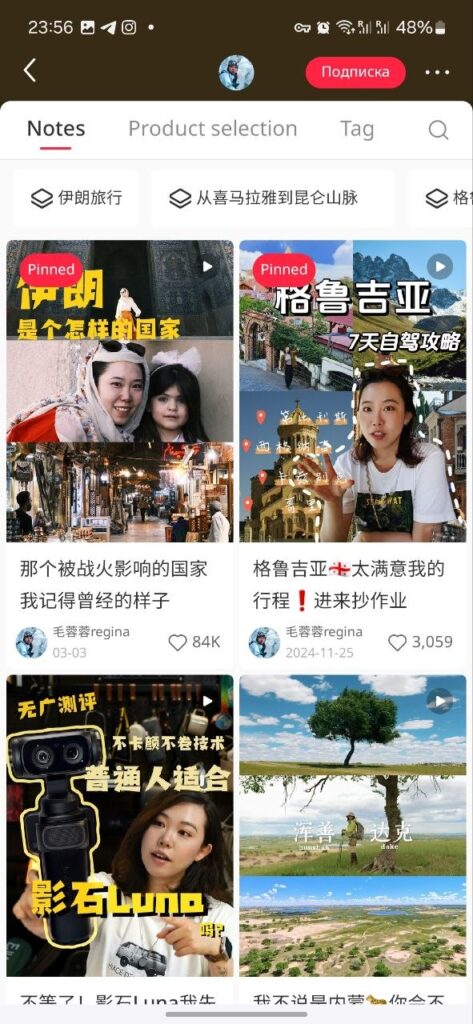
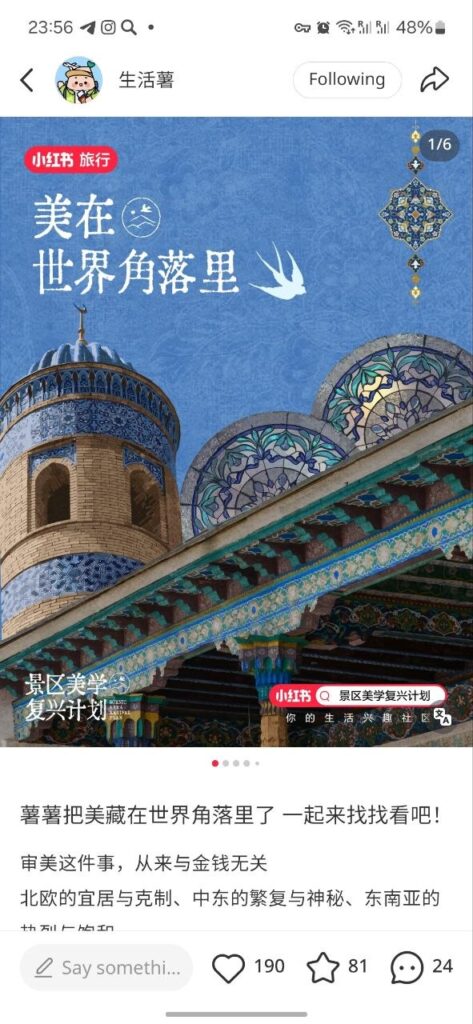
Xiaohongshu for travelers screenshots
DOUYIN
Douyin triggers emotional, impulse-driven travel desires through immersive short-form video. With over 402 billion hospitality-related views and 32% of users now booking directly through livestreams, it has evolved from a pure inspiration feed into a transactional channel in its own right.
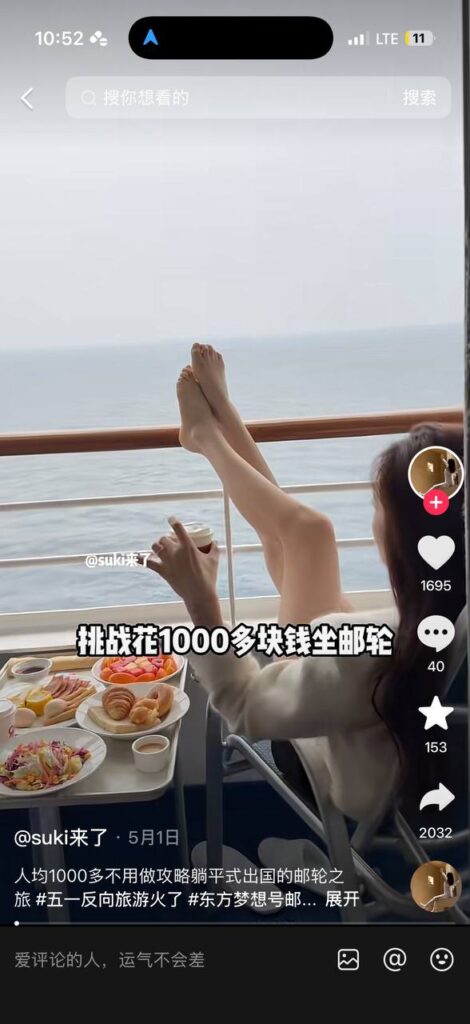
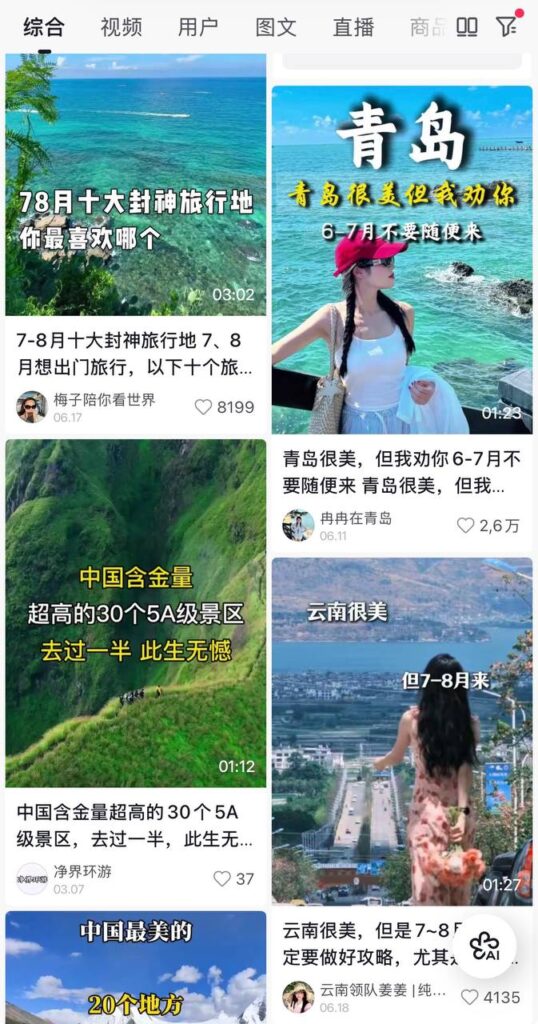
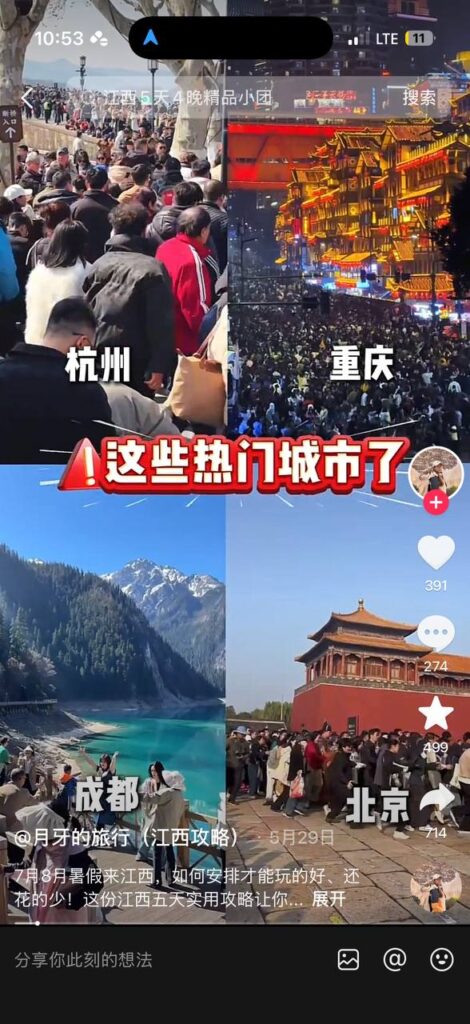
Douyin for travelers screenshots
CTRIP
Ctrip (Trip.com) offers a comprehensive ecosystem for flights, hotels, trains, and experiences. While discovery may start elsewhere, Trip.com is often where travelers finalize comparisons, validate prices, and complete the booking.
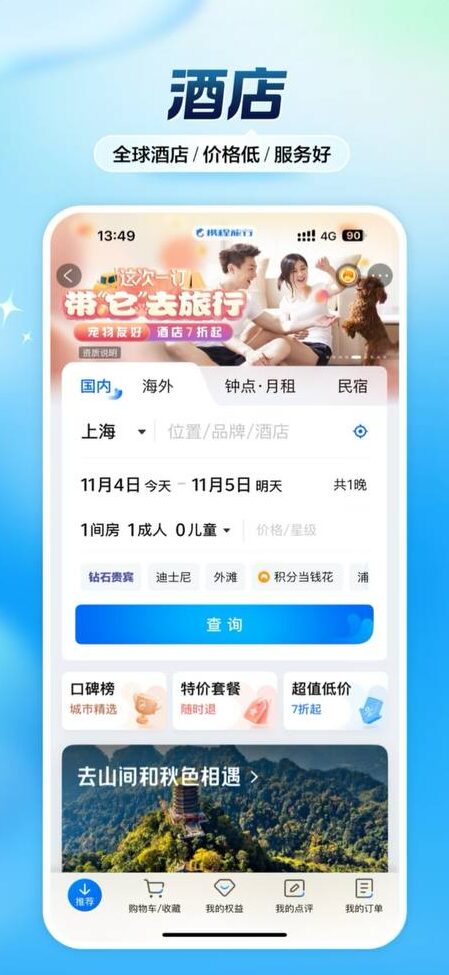
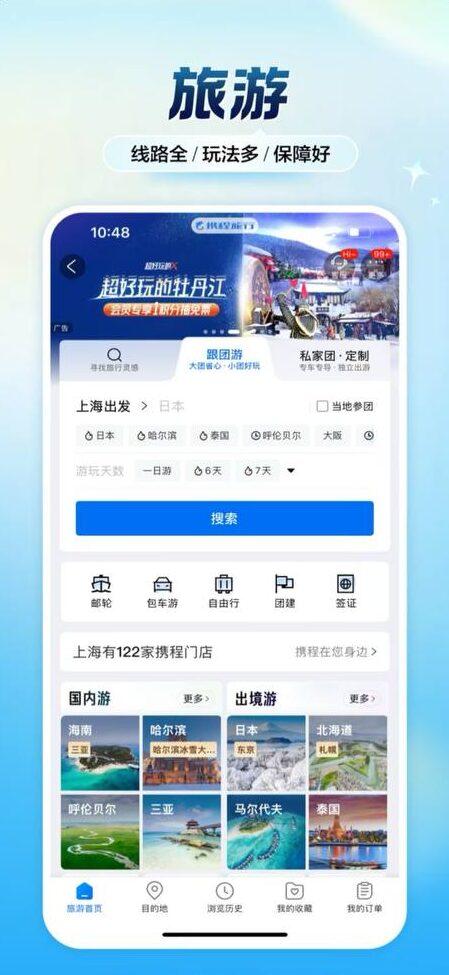
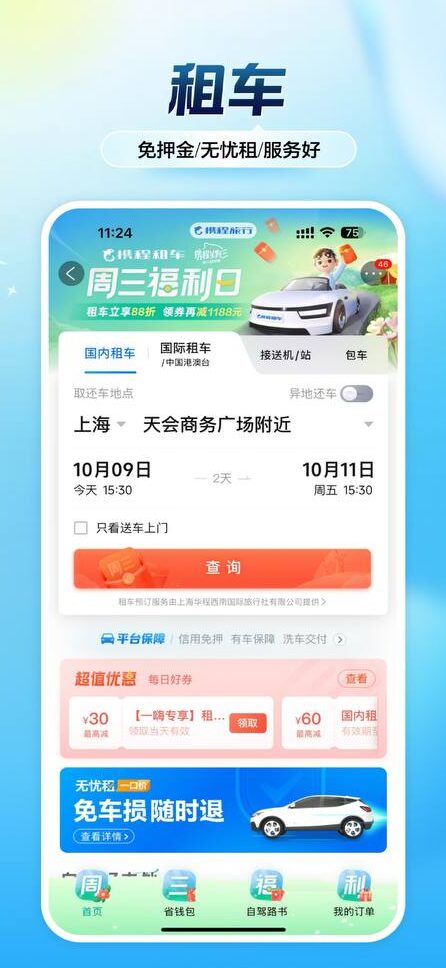
Ctrip for travelers screenshots from official account of platform
Travelers move fluidly across these platforms — from emotional inspiration on Douyin, to rational research on Xiaohongshu, to validation and booking on Ctrip (Trip.com) or WeChat. That means your presence there should be built around useful content, not just campaign slogans, and tailored to the specific role each platform plays in the decision journey.
What makes them choose
Chinese travelers tend to choose brands that reduce uncertainty. The strongest decision factors are trust, clarity, convenience, and relevance. They want to know what the product is, how it works, how to pay, how to get there, and whether other travelers like them had a good experience.
Social proof is especially important. Reviews, creator posts, and peer recommendations often carry more weight than polished brand messaging. If your business has strong visible proof that Chinese guests have enjoyed the product, you lower the psychological risk of booking. In this market, credibility is often more persuasive than discounting.
Content that works
The most effective content for Chinese travelers is useful, specific, and visual. It should help them imagine the trip and remove practical doubts. Generic “beautiful destination” messaging is not enough. They need content that answers the real questions they have before booking.
Useful content includes:
- Room tours and hotel walkthroughs.
- Simple itineraries for 2, 3, or 5 days.
- Food guidance and local dining tips.
- Transport instructions from airports, stations, and city centers.
- Family-friendly or couple-friendly recommendations.
- Seasonal highlights.
- Information about Wi-Fi, payment, language support, and arrival logistics.
A useful principle is this: do not market the place alone, market the life they will have there. Show them how the trip works, not just what it looks like. The more concrete the experience feels, the easier it is to convert attention into bookings.
Booking and payment
One of the easiest ways to lose Chinese travelers is friction at the booking stage. If the site is hard to use, the terms are unclear, the price is not transparent, or the payment options feel unfamiliar, conversion drops. Chinese travelers are highly comfortable with mobile-first behavior, and they expect the booking flow to be just as smooth as the rest of their digital life.
That is why payment flexibility matters so much. Alipay and WeChat Pay remain central to how many Chinese travelers pay when they travel. If your business can support these methods, you remove a major barrier. If not, you need to make the process just as simple and secure with whatever alternatives you do support.
Your booking page should feel local enough to be trusted and clear enough to be understood immediately. That means mobile-friendly design, strong visuals, concise copy, and clear answers to practical questions. The objective is not to impress; it is to reassure and convert.
Service expectations
Chinese tourists notice service quality quickly. They may not demand perfection, but they do expect responsiveness, clarity, and attention to detail. A hotel, attraction, or tour operator that makes communication easy immediately feels more premium and more reliable.
This can be as simple as having Mandarin-friendly information, quick response times, easy directions, and staff who can handle basic guest questions without confusion. If a traveler feels they will not be stuck solving small problems alone, that builds trust. In many cases, service quality is not a “nice extra”; it is part of the product itself.
The best brands think about the full travel journey. How does the guest arrive? How do they check in? How do they ask for help? How do they move around? How do they share the experience? Each of these steps is part of the sales funnel, whether you treat it that way or not.
How to package the offer
Chinese travelers often respond well to packages that feel complete and convenient. Instead of selling a room, a tour, or an attraction on its own, bundle it into something that saves time and gives clarity. The more friction you remove, the easier it is to win the booking.
Strong package ideas include:
- Airport transfer plus accommodation.
- Breakfast plus late checkout.
- Family room plus local attraction access.
- Premium room plus curated city experience.
- Multi-day itineraries with transport and support included.
- Shopping or dining benefits that make the stay feel more valuable.
These offers work because they turn a vague trip into a usable plan. They reduce decision fatigue and make the value obvious. In a market where travelers compare many options, that can make a meaningful difference.
Where to invest your marketing
If you want to attract Chinese tourists seriously, your media mix should reflect how they actually behave. A Western-style campaign that relies only on Google, Instagram, or English-language travel media will not be enough. The Chinese market needs its own ecosystem.
A strong mix usually includes:
- Chinese OTAs and travel platforms.
- WeChat for CRM, communication, and retention.
- Xiaohongshu for discovery and social proof.
- Douyin for short video and awareness.
- Partnerships with creators or travel influencers who have relevant audiences.
- Chinese-language landing pages or localised content assets.
The key is not to be everywhere. It is to be in the right places with the right message. If your brand feels native enough to trust and useful enough to save, it becomes part of the traveler’s consideration set. ce.
How to build trust fast
Trust in this market is built through repetition and consistency. A single campaign will not do enough. You need a visible pattern that says: this brand understands Chinese travelers, serves them well, and is worth booking.
Practical trust-building actions include:
- Collecting real guest reviews.
- Publishing authentic user-generated content.
- Responding to negative feedback quickly and professionally.
- Working with credible creators rather than random influencers.
- Showing practical details that reduce uncertainty.
- Keeping your visual identity and service promise consistent across channels.
Build trust systematically, and you won’t have to convince travelers to book — they’ll convince themselves.
A useful operating model
If you want a simple way to structure your China strategy, use this model:
- Discovery: make the brand visible on the platforms Chinese travelers use.
- Validation: show reviews, creator content, and proof of quality.
- Conversion: simplify booking, payment, and communication.
- Experience: deliver a smooth stay or visit with clear service support.
- Advocacy: make it easy for travelers to post, review, and recommend.
That sequence matters because each stage supports the next one. If the traveler discovers you but cannot validate you, you lose them. If they book but the experience is awkward, you lose the repeat value. If they are happy but you do not encourage reviews, you lose the amplification.
What makes you stand out
Brands that attract Chinese tourists successfully tend to do a few things consistently well. They think from the traveler’s perspective. They remove friction. They speak the traveler’s language, both literally and culturally. And they treat the Chinese market as a serious strategic priority, not an experimental side project.
That is what makes a business look credible. Not flashy slogans, but operational understanding. Not token localization, but actual preparedness. Not one-off campaigns, but a repeatable system.
If your destination, hotel, or tourism brand can say, “Chinese travelers can find us, understand us, pay us, enjoy us, and recommend us,” then you are already ahead of most competitors. And in 2026, that is the standard worth aiming for.
Entrust your brand to us, and we’ll take full responsibility for growing your visibility and reputation in the Chinese market.
FAQ
Because in 2026, there will be 165–175 million outbound trips from mainland China. And they spend significantly more than the average tourist: 28% plan a budget of over 50,000 yuan (~$6,900) per trip. This isn’t just a flow — it’s a powerful economic engine.
Not through search engines or hotel websites. They discover you through an ecosystem of apps: WeChat, Xiaohongshu, Douyin, and Trip.com. If your brand isn’t present on at least two of these platforms, you’re invisible to a large portion of the market.
Useful, specific, and visual content. Not just «beautiful destination» — but answers to real questions: how to get there, what to eat, how many days to spend, what to do with kids, how to pay, is there Wi-Fi. The principle is: don’t market the place alone — market the life they will have there.
Treating Chinese tourists as a single, uniform audience. This is too large and segmented a market. A family with kids, a young couple on a weekend getaway, and an experienced traveler seeking premium experiences — these are three different strategies, three different messages, three different decision-making paths.
Trust is built through repetition and consistency. Real reviews, authentic user-generated content, working with credible creators, fast responses to feedback, and no surprises in service. When you remove uncertainty, you stop convincing travelers to book — they convince themselves.
A five-stage model: Discovery → Validation → Conversion → Experience → Advocacy. Each stage logically leads to the next. If you’ve built a system where Chinese travelers can find you, understand you, pay you, enjoy you, and recommend you — you’re already ahead of 90% of competitors.