

If you are thinking about expanding your business opportunities and have turned your attention to the rapidly developing China, then sooner or later you will encounter such a digital giant as Baidu.
At first glance Baidu may seem very similar to its Western analogue Google — just a search engine with similar capabilities. Unfortunately, many think this way, choose the same strategy, and in the end it does not work. This happens due to differences shaped by culture, government regulations, language structure, and user intent.
In this article, we will delve into key differences in SEO strategies for Baidu and Google, share industry insights to adapt to the Chinese platform.
What Drives Each Search Engine
Google operates on a principle of organizing the world’s information and making it universally accessible. Baidu, on the other hand, is a product of China’s unique digital landscape. It prioritizes stability, regulation, and the integration of local internet standards.

Technical SEO: Crawling, Hosting, and Compliance
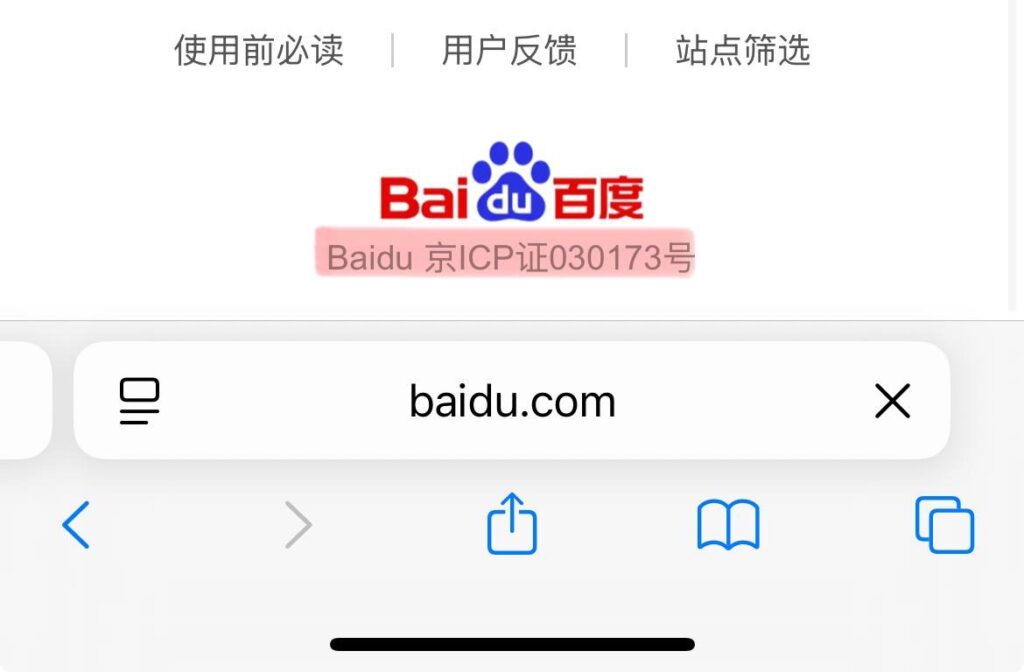
Technical SEO for Google is about speed, mobile usability, and crawl efficiency. For Baidu, it is about access, compliance, and server geography.
Content Strategy Differences
Content is king on both engines, but the definition of quality differs.
For Baidu, you must adapt content to local cultural nuances. Use local measurements, date formats and references to local holidays. For Google, localization usually means translating keywords and adapting currency, but the global brand voice remains consistent.
| Category | Baidu SEO | Google SEO |
|---|---|---|
| Language and Keyword Approach | Simplified Chinese; requires exact match keywords. | Multilingual contexts; Employs semantic analysis and natural language processing. |
| Hosting and Technical Compliance | Requires mainland China hosting and a valid ICP license for stable crawling. | Accepts global hosting; values speed and Core Web Vitals regardless of server location. |
| Crawling Capabilities | Limited JavaScript rendering; prefers static HTML and simple site structures. | Robust JavaScript rendering; handles modern frameworks like React and Angular. |
| Censorship | Strict adherence to local censorship laws; content filtering enforced. | Minimal censorship (outside specific countries). |
| Content Style | Favors factual, encyclopedic, and keyword‑dense pages (e.g., Baike‑style). | Rewards in‑depth, intent‑driven, and user‑focused content. |
Besides, Baidu continues to value several classic SEO signals that Google has largely deprioritized.
- The meta keywords tag
- Titles should feature target keywords and match user queries.
- Using bold or strong tags around key phrases for Baiduspider identifying topic focus.
- Clean, short URLs written in pinyin or simple English.
LINK BUILDING
Baidu places emphasis on backlinks originating from domestic Chinese websites, government portals, and reputable local directories. Due to the closed nature of China’s digital ecosystem, the value of a link depends heavily on its context and is largely determined by locally recognized trust signals.
Key link building strategies include:
- obtaining citations within Baidu’s own properties whenever possible
- engaging with established Chinese content platforms;
- forming partnerships with local media and publishers;
- acquiring links from niche industry networks and vertical directories;
Platform Ecosystems and SERP Features
The Search Engine Results Page (SERP) looks very different on Baidu compared to Google.
Baidu SERP Characteristics
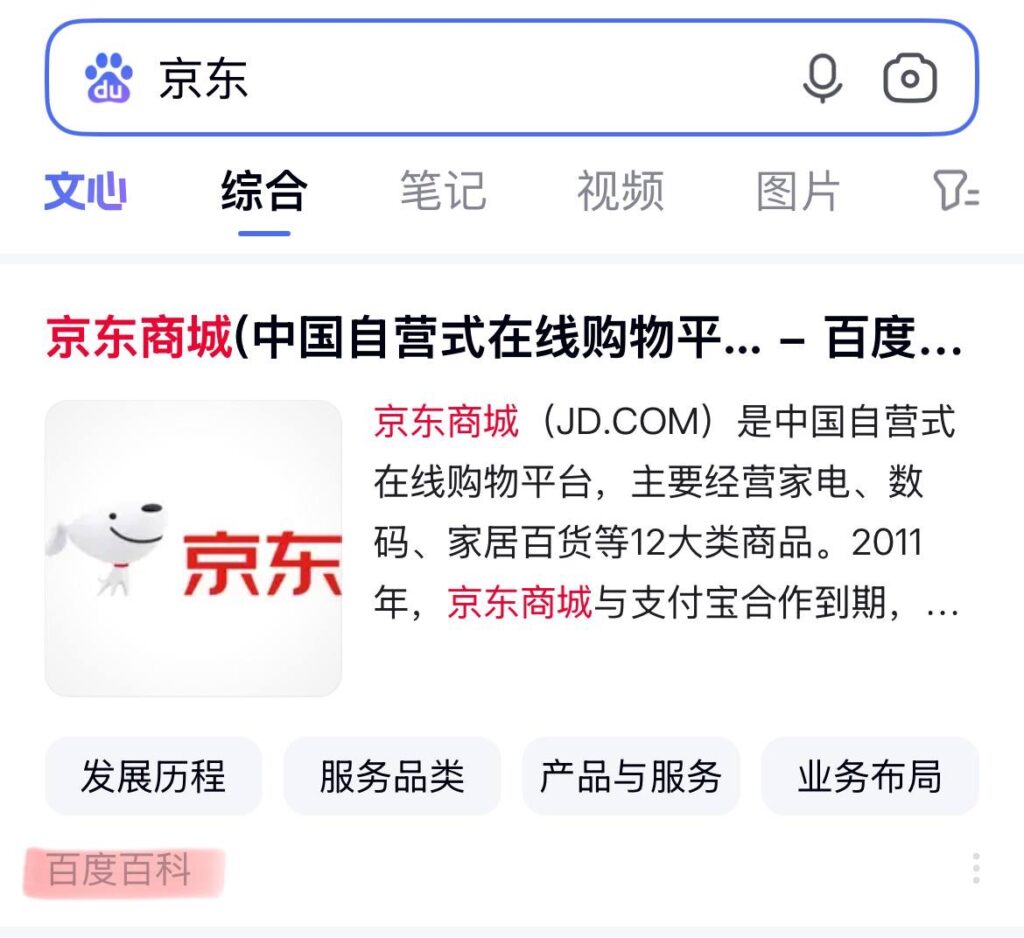
Baidu’s search results pages frequently showcase its own ecosystem features, including Baidu Baike, Zhidao, Tieba, and various vertical search tools. These elements tend to take up a large portion of the page, often pushing organic listings further down. To succeed, effective strategies usually integrate traditional SEO with active participation and visibility within those Baidu-owned platforms.
Google SERP Characteristics
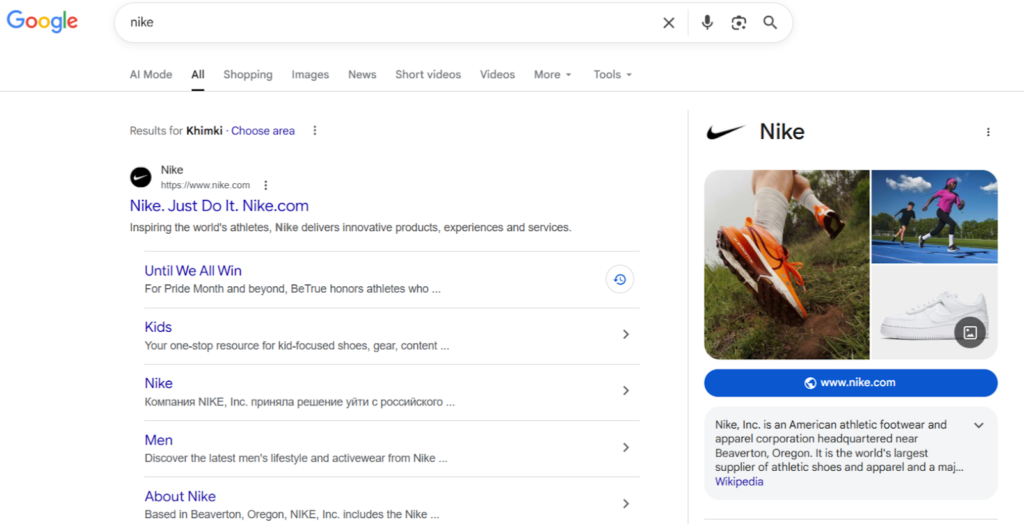
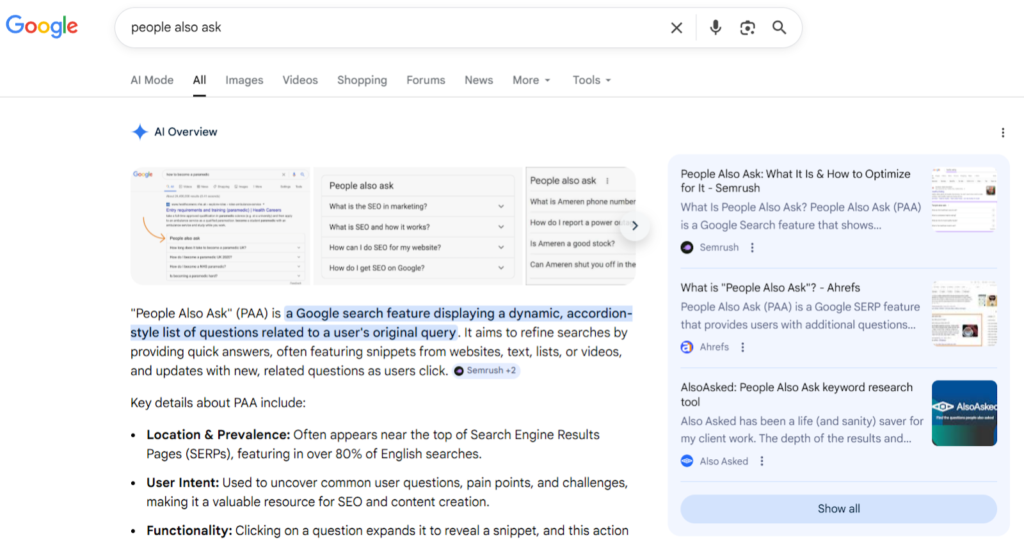
Google’s search results feature a variety of rich elements such as Knowledge Panels, featured snippets, People Also Ask sections, video carousels, and other interactive components. To secure these prominent placements, brands need to excel in using structured data, optimizing content formatting, and accurately understanding user query intent.
Advertising Ecosystems and Their Influence on SEO
Organic optimization and paid shape how users engage with search results on each platform. Both Baidu and Google integrate ads into their SERPs, but the degree of integration and its impact on organic visibility differ substantially.
Baidu Paid Search
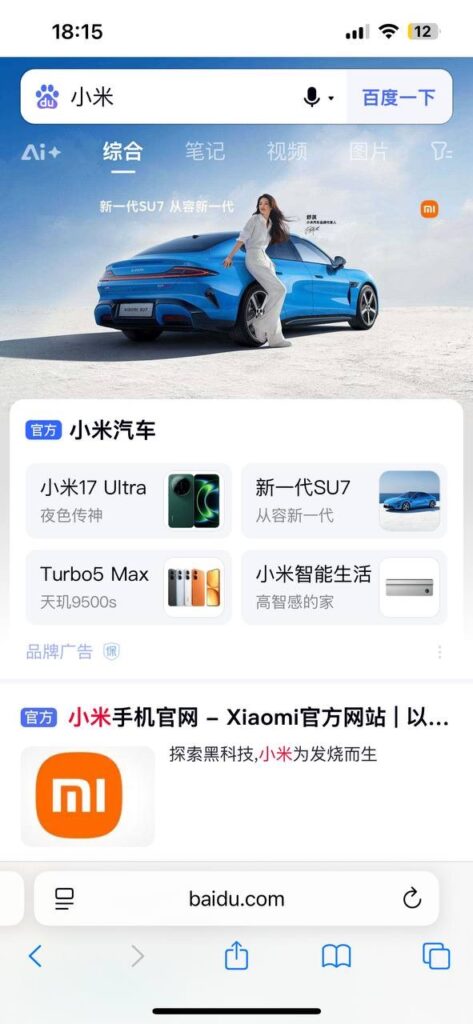
Baidu displays paid advertisements prominently, often placing them at the very top of the results page. A notable feature is the «Brand Zone,» a premium, visually rich ad unit that occupies substantial above-the-fold space. It takes up to two-thirds of the first page and contains images and text. Moreover, running Baidu ads can indirectly enhance brand credibility, as users often associate ad placements with legitimacy and market presence.

Google Ads
Ads in Google are distinctly labeled with an «Ad» icon and typically appear at the top or bottom of the page, while organic listings occupy a predictable central space. Features like Google Shopping and text ads may capture initial clicks, but strong organic rankings still drive substantial traffic independently. However, PPC can complement organic efforts during brand launches or competitive transitions.
Which One to Opt for?
Choosing between Baidu and Google SEO depends on which market is needed for targeting.
For the Chinese market, you must adopt Baidu’s rules. This means investing in an ICP license, local hosting, and a strategy that utilizes Baidu’s ecosystem (Baike, Zhidao).
If your goal is the global market, Google remains the standard. Focus on user intent, mobile-first indexing, quality backlinks, and E-E-A-T.
Ultimately, success on Baidu requires deep localization and patience with its less advanced crawler. Success on Google requires technical sophistication and content authority. Understanding these key differences ensures you do not waste resources trying to force a Western strategy into an Eastern ecosystem.
FAQ
The main difference is that Baidu specifically targets the Chinese market, requiring an ICP license, local hosting, and exact-match simplified Chinese keywords. Google focuses on a global audience, prioritizing a semantic understanding of user intent and high technical sophistication.
While technically possible, hosting outside mainland China typically leads to slow loading speeds and crawler timeouts due to the Great Firewall. For stable crawling and optimal Baidu SEO performance, local Chinese hosting combined with a valid ICP license is heavily recommended.
Baidu’s crawler is less advanced than Googlebot and struggles to index JavaScript-heavy websites or client-side rendering. To ensure your content is successfully crawled and indexed on Baidu, you must rely on clean, server-rendered static HTML.