

Brands entering China’s cross—border e—commerce market often ask the same question: are Douyin and Xiaohongshu the same?
No — they’re both major Chinese platforms, but they solve different jobs in the consumer journey.
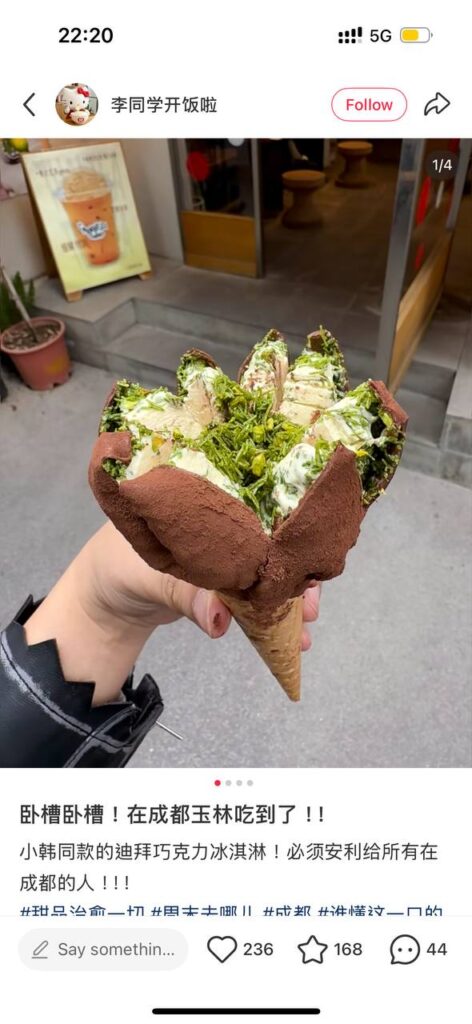
XiaoHongShu (小红书, “Little Red Book”, also called “RED/Rednote”) is strongest for searchable lifestyle discovery, product research, reviews, and “word-of-mouth at scale.” Xiaohongshu is primarily a platform for product discovery, research, and trust building. Users often come here to search for reviews, compare products, and save useful posts before making a purchase decision.
Douyin (抖音) is strongest for algorithm-driven entertainment reach, trend amplification, and commerce via short video + live streaming — in a market where short video is a mainstream behavior. Douyin, on the other hand, is designed for scale, speed, and entertainment-driven engagement. Brands use it to quickly reach large audiences, participate in trends, and generate sales through short videos and live streaming.
What is XiaoHongShu
Xiaohongshu is a Chinese social media and e—commerce platform that combines user-generated content (UGC) with product discovery and social commerce. The platform is operated by Xingyin Information Technology (Shanghai) Co., Ltd., a Shanghai-based technology company. It has evolved into one of China’s major lifestyle platforms, where users share and discover content related to beauty, skincare, fashion, travel, wellness, food, and home products. Xiaohongshu literally translates as “Little Red Book.” Both names refer to the same platform. In China it is usually called Xiaohongshu or XHS, while internationally the brand is often referred to as RED or Little Red Book.
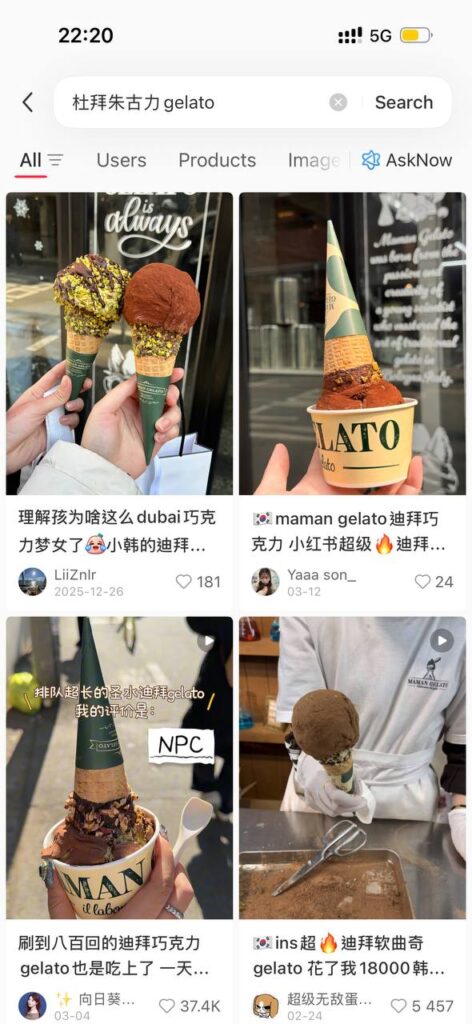
A defining characteristic of Xiaohongshu is that it behaves like a social search engine: users proactively search, compare, and evaluate before buying. Industry reporting frequently cites:
-
~70%
of MAU engaging in search activity
-
42%
of new users using search on day one
-
~90%
saying search content influences buying decisions
Practical implications for brands
On Xiaohongshu, content should be structured as clear and useful product information. Users come to the platform to research products, compare options, and save useful posts for later. Popular content formats include image-based posts, carousel-style cards, and even simple text-only notes that provide clear and structured information. While short videos are also present, they are not the dominant format — static posts with visuals and detailed explanations often perform just as well or better for product discovery.
Typical high-performing posts include:
- “How it works” notes
- before/after proof (where compliant and authentic)
- ingredient or feature breakdowns
- comparisons and “who it’s for” explanations
- structured FAQs
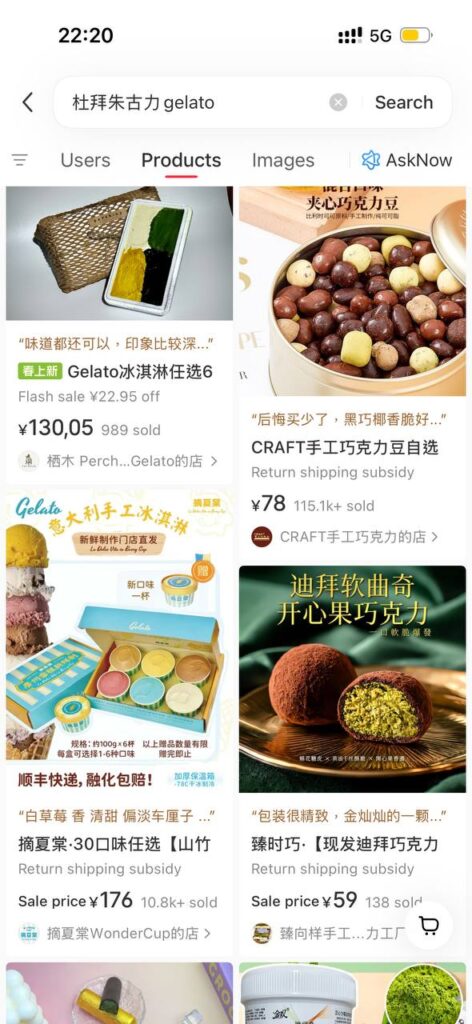
The platform also supports live streaming and integrated e-commerce stores, allowing brands to connect product discovery content directly with real-time sales and in-app purchases.
How Does Douyin Work
Douyin is China’s leading short—video platform and the Chinese version of TikTok. The platform is built around a recommendation algorithm that distributes content to users based on their viewing behavior and engagement. In recent years, the platform has grown into one of the most influential apps in the Chinese digital ecosystem. As of 2024–2025, Douyin has over 700 million daily active users and around 760 million monthly active users in China, making it one of the most widely used social platforms in the country.
According to the China Internet Network Information Center (CNNIC), by the end of 2024 China had around 1.06 billion short-video users, making short video one of the most widely adopted forms of online content in the country.
Douyin ’s core mechanics are:
- Strong “trend infrastructure” (sounds, formats, challenges)
- Algorithm-based recommendation feed that distributes content beyond an account’s existing followers
- Short-form vertical video as the default format
- Live streaming + in-app commerce as a major conversion engine
Practical implications for brands
Douyin rewards:
- fast hooks, strong watch-time, and high interaction velocity
- creative that fits platform-native trends
- repeatable content templates (series, formats)
- performance creative that can be iterated weekly (often daily)
Xiaohongshu vs Douyin — What are the Differences
| Xiaohongshu | Douyin | |
|---|---|---|
| Content Format & Audience | Xiaohongshu supports text notes, images, and short videos — and is structurally designed for detailed product context (how-to, routines, comparisons). Xiaohongshu generally over-indexes on lifestyle decision—making and research behaviors (especially in beauty/lifestyle categories). | Douyin is primarily video-first, optimized for rapid entertainment consumption and scalable reach. Douyin overindexes on mass reach and attention moments, across a broader population given the scale of short video adoption in China. |
| Algorithm | Xiaohongshu distribution is heavily shaped by topic relevance + search behavior + saves/collects and community engagement patterns. That’s why “evergreen” content can resurface when users search later. | Douyin distribution is shaped by real-time engagement velocity (watch time, completion rate, shares, comments) and trend resonance. The platform is structurally built to push engaging content beyond your follower base. |
| What this means for marketers | Xiaohongshu: win via information value + trust signals (structured notes, proof, comparisons) | Douyin : win via creative performance + iteration (hooks, series, templates) |
| Engagement | Xiaohongshu engagement tends to be deeper in intent: saves, long comments, “asking for links,” and “what should I buy?” conversations — often closer to purchase evaluation. | Douyin engagement can be massive but more fleeting: likes/shares spike quickly, then decay as trends move on. |
| Content Longevity & Discoverability | Content can remain discoverable for weeks/months because users actively search and compare — so strong posts act like compounding assets. | Content can explode quickly but often decays fast because distribution is tied to trend cycles and feed freshness. |
| Influencer Culture | Strong KOC + mid-tier creator influence for credibility-driven categories; “real usage” storytelling is central. | Creator distribution and live commerce are core; top creators can drive mass reach and sales spikes via lives. |
| Data & Analytics | Xiaohongshu analytics is often used for understanding content resonance, search discovery, saves, and audience intent. | Douyin analytics is often used for creative performance, funnel velocity, and conversion in commerce scenarios. |
Xiaohongshu vs Douyin — Similarities
What is Xiaohongshu Good For
-
Targeted Segmentation
Xiaohongshu is particularly strong when you need to reach specific lifestyle clusters and convert through relevance: skincare routines, travel planning, “best for sensitive skin,” “top sunscreen for humid climate,” etc.
-
Strong User Interaction
Xiaohongshu comment sections are often high-signal: users ask about shade matching, ingredients, sizing, shipping, authenticity, and alternatives — which is valuable for conversion optimization.
-
Targeting Bottom-Funnel Consumers for Effective Conversions
Because Xiaohongshu functions like social search, users often arrive with clear intent: “Is it worth it?”, “real reviews?”, “comparison vs competitor?”
That maps well to mid-to-bottom funnel strategies.
-
Public Perception
For cross-border brands, Xiaohongshu is a key platform for shaping trust and perceived quality via accumulated UGC and consistent positioning.
-
Product Launches and Promotions
Xiaohongshu is effective for launches when you combine seeded KOC credibility, a few strong category creators ,brand-owned educational content and some search-friendly topic coverage (“how to use”, “who it’s for”, “results timeline”).
-
Brand Authority & Thought Leadership
If your brand has expertise in formulation, sourcing, product safety, performance testing, sustainability, or craftsmanship, Xiaohongshu is a strong place to publish expert content that users reference later.
What is Douyin Good For
-
Content Virality and Trend-Riding
Douyin excels at high—scale reach through trend sounds, challenge mechanics, rapid storytelling, “wow” demonstrations.
This is ideal when you need fast awareness or you are launching with a strong visual hook.
-
Live Streaming Services
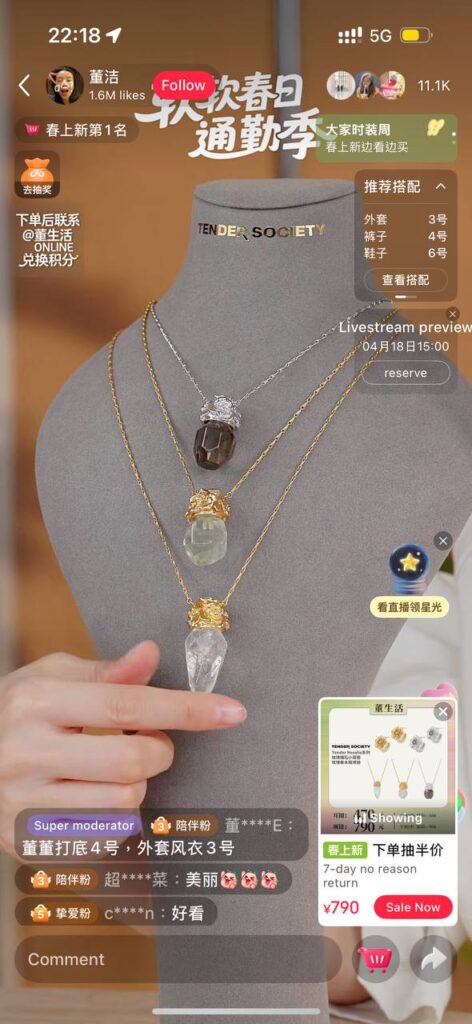
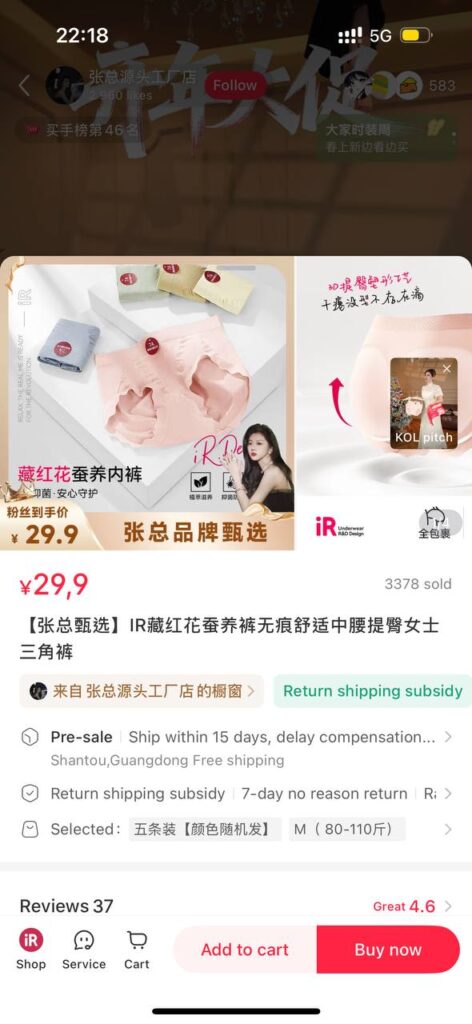
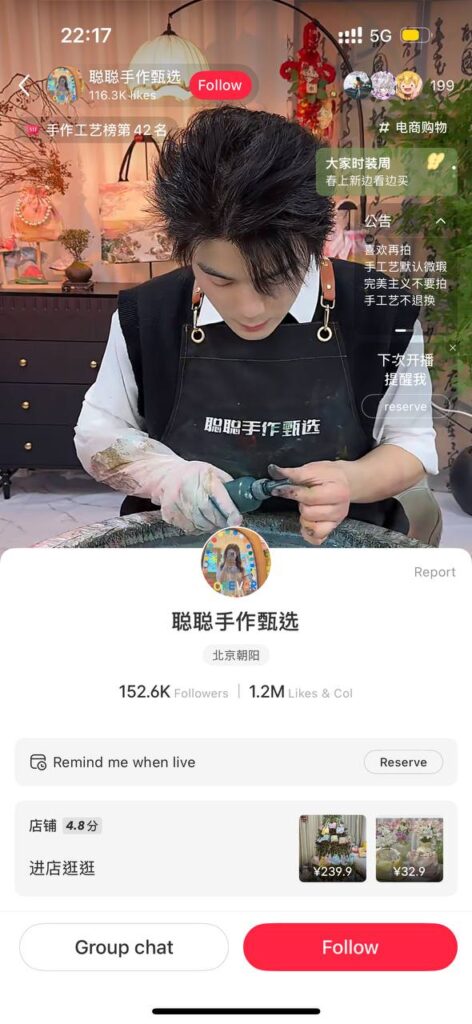
Douyin is a leading live commerce arena in China’s broader context of massive short—video and live—stream adoption. By Dec 2024, China had 833 million live-stream users overall, underscoring how mainstream live is as a behavior.
-
Content Repurposing
If you already produce video assets like brand films, UGC, or tutorials, Douyin is often the best place to atomize them into short formats and iterate quickly.
-
Large Scale Branding
For brands that need broad awareness quickly — especially in categories that can be demonstrated visually — Douyin ’s scale is hard to ignore.
FAQ
No, they serve very different purposes in the Chinese consumer journey. Xiaohongshu acts as a social search engine for product research and trust-building, while Douyin is built for entertainment-driven mass reach and live commerce.
Xiaohongshu is the better choice for content longevity because users actively search for and save posts for future reference. On Douyin, content can go viral rapidly but decays just as fast once the trend cycle moves on.
Research-heavy products like skincare, premium home goods, and supplements thrive on Xiaohongshu. Users rely on the platform for detailed comparisons, authentic reviews, and structured product information before making a purchase.
Brands generate sales on Douyin through highly engaging, fast-paced short videos and live streaming events. Success requires tapping into current platform trends and maintaining a high frequency of creative output.
A winning strategy often utilizes both platforms by assigning them different roles. Brands typically use Douyin for top-of-funnel reach and viral acceleration, while using Xiaohongshu to build trust and capture high-intent search traffic.