











![Guide to Marketing in China: Trends, Strategies, Rules [2026]](https://mates-asia.com/wp-content/uploads/2026/02/guide-to-marketing-in-china-1024x533.png)


«To know one's steps is to master the Way.
Yet, Cookies shall light the road. Please, decide which marks shall remain.»
Promotion on Chinese Video Hosting Platforms
- Account Registration and Verification on Major Chinese Video Platforms
- Competitor Analysis and Content Strategy Development
- Profile Setup and Content Creation
- Advertising Account Registration and Campaign Launch
- Collaborations with Platform Opinion Leaders
In China, familiar platforms like YouTube and Vimeo are also blocked. Instead, the Chinese market is dominated by local video hosting services. This article explores three major Chinese video platforms and their potential for promoting foreign businesses: Youku, Bilibili, and Xigua.
Youku: The «Chinese YouTube»
Youku is one of China’s most popular video platforms. Launched in 2006 and owned by the Alibaba Group, it initially started as a YouTube equivalent but has since evolved into a full-fledged internet television service. Youku users are accustomed to consuming high-quality content and enjoy a wide variety of options—including movies, TV series, variety shows, sports broadcasts, and much more.
Important Note: The subsequent text about OTA (Online Travel Agencies) appears to be unrelated to the description of Youku. It discusses how Chinese tourists use OTA platforms to purchase tickets, book hotels and restaurants, and manage other travel arrangements, highlighting that these services combine the functions of travel platforms and social networks.
Advertising on Youku:
The platform does not support targeted advertising. Only banner and reserved ad formats are available, without the option to select a specific audience. The minimum cost starts from 50,000 CNY.
Monetization Methods
In-Video Advertising
Cost-per-view (CPV) and cost-per-click (CPC) rates vary for each channel. Higher metrics—such as ad click-through rates, overall channel activity, view counts, and subscriber numbers—directly influence the advertising CPM (cost per mille) and, consequently, the channel’s revenue. Essentially, the better a channel performs, the more it earns.
User Gifts
Creators can earn between 1,000 and 8,000 CNY for every million views on the platform. However, to activate monetization features, a Chinese business license and a Chinese ID card are required.
Launch with Mates Asia
Our team is ready to consult you!
Bilibili: The True «Chinese YouTube»
Bilibili is a video hosting platform that was launched in 2009 and now boasts 332 million monthly active users (MAU). While it originally targeted anime and manga enthusiasts, the platform has significantly expanded its reach and influence over time.
A key feature of Bilibili is its creator monetization system, which allows users to upload videos and earn revenue. This model, similar to YouTube’s, sets Bilibili apart from other Chinese video platforms and solidifies its reputation as the most YouTube-like service in China.
Advertising Formats
-
Huahuo (花火, Huahuo):
Creators with 10,000 or more subscribers can join the special Huahuo partnership program, which provides better content monetization terms and helps creators more easily find advertisers. Collaboration with advertisers is possible through co-creation formats where the creator places links to the advertiser’s store or products. Brands can also list products available for promotion, and creators earn commissions from each sale made through their links.
-
Qifei (起飞, Qifei):
Brands and companies on Bilibili can promote both through KOL integrations and targeted advertising. Companies need to set up a Qifei account — a full-featured advertising dashboard through which they can launch advertising campaigns, analyze and segment audiences, and much more.
Reservable Advertising Formats
-
Huahuo (花火, Huahuo):
Creators with 10,000 or more subscribers can join the special Huahuo partnership program, which provides better content monetization terms and helps creators more easily find advertisers. Collaboration with advertisers is possible through co-creation formats where the creator places links to the advertiser’s store or products. Brands can also list products available for promotion, and creators earn commissions from each sale made through their links.
-
Qifei (起飞, Qifei):
Brands and companies on Bilibili can promote both through KOL integrations and targeted advertising. Companies need to set up a Qifei account through which they can launch advertising campaigns, analyze and segment audiences, and much more.
-
Content-Integrated Advertising
Appears in recommended and related video lists (播放页推荐)
To launch advertising, you need to create an account on the platform, complete verification, open an advertising account, and prepare a promotion strategy. The platform offers numerous targeting settings, and there is also the possibility to register using a Russian legal entity!
Content Monetization on Bilibili
-
Earnings per 1 million views vary for each creator and depend on subscriber count, view numbers, content quality, and publishing frequency. Content monetization can be activated from 500,000 subscribers, while account monetization is available starting from 10,000 video views.
-
Donations during streams
-
Gifts from users
-
Participation in contests
However, a Chinese passport is required to activate monetization features.
Xigua: A New Player in the Market
Xigua is a relatively new video platform that was launched in 2018. It belongs to the Chinese internet technology company ByteDance, which also owns the popular social network TikTok. MAU is 120 million users. Xigua offers its users high-quality content across various genres, including movies, TV series, variety shows, news, and more. The platform is rapidly gaining popularity thanks to its unique recommendation algorithm, which allows users to discover content that matches their interests. Banner advertising is available on the platform, with the cost for 1 million impressions starting from 40,000 yuan.
Youku, Bilibili, and Xigua are the three main video platforms in China with their own characteristics and different audiences. Youku is a popular internet television service, Bilibili is a platform for anime and manga, and Xigua is a new player in the market with a unique recommendation algorithm. If you want to upload your video to Chinese platforms, you will have to familiarize yourself with the Chinese language and internet terminology. However, this can be useful for attracting a new audience and expanding your influence in the Chinese video content market.
Our team is ready to provide assistance on all three platforms:
-
Registration and verification for Russian legal entities, obtaining the blue checkmark.
-
Creation of an advertising account and depositing advertising funds.
-
Preparation of advertising creatives and passing moderation.
-
Setup of effective advertising campaigns.
News
and Opinions
At the XI Eastern Economic Forum, the Far East and Arctic Development Corporation and the digital marketing agency Mates Asia signed an agreement on the direct export of Russian Far Eastern content to China. As part of this partnership, at least five multimedia products created by the creative industries of the Far Eastern Federal District are slated for introduction to the Chinese market.
In March 2026, Douyin passed 1 billion monthly active users inside mainland China alone — the first short-video platform in the country to cross that line. In 2025, its e-commerce arm generated an estimated ¥4.3–4.5 trillion in GMV, growing roughly 27–30% year over year. Those aren’t the numbers of an app. They’re the numbers of a national retail channel that happens to look like an entertainment feed.

21 / 08 / 2026
China AI Search Optimization Guide 2026: How to Rank in DeepSeek, Doubao, Baidu AI, Qwen & Kimi
By December 2025, China’s generative AI user base had reached 602 million people, and time spent inside AI apps was growing 176.7% year over year, according to QuestMobile. That is not an early-adopter curve anymore. It is how a majority of connected Chinese consumers now research products, compare suppliers, and decide who to trust — often before they ever type a keyword into Baidu’s classic search bar.

26 / 07 / 2026
JD.com Advertising & Selling Guide: How to Promote on China’s Premium Ecommerce Platform
China is home to the world’s largest ecommerce market, and JD.com (京东商城) has established itself as one of its most trusted online retail platforms. While many international brands initially think of Alibaba’s Tmall when entering China, JD.com has built a distinct competitive advantage through product authenticity, premium customer service, and one of the country’s фmost sophisticated logistics networks.
South Korea has one of the highest social media penetration rates in the world – over 90% of the population uses social platforms. It is a highly digital and solvent market. Brands enter it to increase sales. However, local platforms and consumer behaviour differ from what many international marketers are used to. Without understanding these differences, campaigns fail.
China’s payment landscape represents one of the most dramatic financial transformations in modern history. The country jumped directly from cash-based economy to mobile payment dominance, skipping the credit card era that defined Western payment evolution. Today, nearly 90% of Chinese consumers use digital wallets, creating a nearly cashless society where QR codes reign supreme.
Learn how to promote games in China and successfully enter the Chinese gaming industry. This guide covers the China video game market, mobile gaming trends, ISBN licensing, and effective marketing strategies. Discover how to release a game in China, navigate the Chinese gaming industry, and promote games to millions of players.
WeChat mini-app for travelers screenshots Xiaohongshu for travelers screenshots Douyin for travelers screenshots Ctrip for travelers screenshots from official account of platform
Eight out of ten Chinese internet users have bought a product through a live stream at least once. In 2024, the country’s livestream commerce market generated 4.5 trillion yuan in gross merchandise value, or GMV. Forecasts suggest it will surpass 1 trillion US dollars by 2026.
By 2026, the myth that Xiaohongshu is simply “the Chinese Instagram” has been completely shattered. Both platforms deal with visual content, but their inner workings, user behavior, and commercial potential have diverged so much that trying to apply a single strategy will burn your budget. These are no longer competitors — they are two different worlds, and brands need to choose where they want to win.

14 / 05 / 2026
Tmall Advertising Strategy: Full Guide to Promotion & Ads on China’s Top Ecommerce Platform
If you want to grow sales in China, Tmall is often not just “another channel”, but the core revenue engine inside Alibaba’s ecosystem. Shoppers come to Tmall with clear purchase intent, search for specific brands or categories, compare options, and convert directly on the platform. That makes your Tmall marketing strategy a mix of brand building, conversion optimization, and performance advertising rather than simple “store listing”.
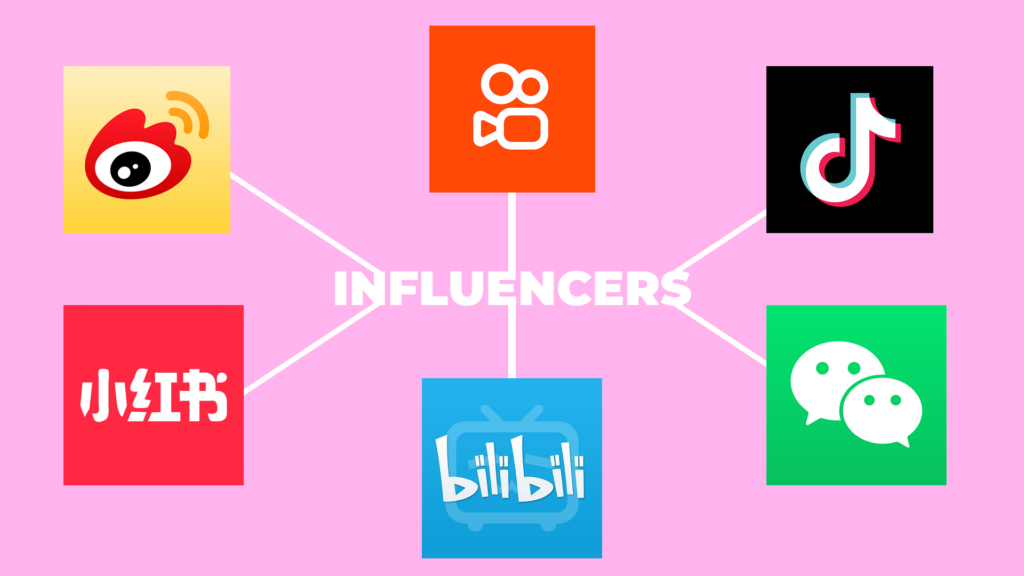
The Chinese market offers massive opportunities for brands, but you don’t necessarily need a celebrity budget to break in. The secret is working with micro- and nano-influencers. Locally, they are known as KOCs—Key Opinion Consumers. These aren’t polished public experts. Their whole appeal is that they look and sound like real people. Their followers treat them like friends, not advertisers.

06 / 05 / 2026
Zhihu Marketing Guide: What is Zhihu? Chinese Q&A Platform Marketing Strategy for Brands & Companies
If you are planning to promote your brand in China, you probably already know the big names: WeChat, Douyin, RedNote, Baidu and Weibo. But there is one platform many international companies still underestimate, even though it can quietly shape brand trust long before a customer is ready to buy — and that platform is Zhihu (知乎).
More than 800 million people browse Taobao every single month. Most sellers never reach the first page of search results unless they pay for ads. This is a fact.
China is not a new market for your existing product. China is a different universe. There is no Google Play, no Facebook, no Instagram, and no Twitter. Instead, you face hundreds of Android stores, a censorship system that rejects apps for reasons you have never heard of, and payment systems that require deep local integration.
China is a separate digital market. As we move through 2026, the rules of engagement have shifted again. The era of simply hiring a celebrity with millions of followers is fading. Today, success belongs to brands that master the delicate ecosystem of Key Opinion Leaders (KOLs) , Key Opinion Consumers (KOCs) , and emerging Cultural Opinion Leaders (COLs) .
If you are thinking about expanding your business opportunities and have turned your attention to the rapidly developing China, then sooner or later you will encounter such a digital giant as Baidu.

30 / 03 / 2026
Xiaohongshu and Douyin: A Guide for Brands Entering China’s Cross-Border E-Commerce Market
Brands entering China’s cross—border e—commerce market often ask the same question: are Douyin and Xiaohongshu the same?
The Chinese Internet is often compared to a separate universe. It operates by its own rules, features its own platforms, and follows a distinct logic of consumer behaviour. While in the West the path to purchase often begins with Amazon or Google, in China things are both more complex and, at the same time, more structured.
What is Bilibili (哔哩哔哩)? Is Bilibili Like YouTube? Is Bilibili still popular in China? Bilibili vs YouTube: 7 Major Differences You Should Know 1. Market Size and User Base 2. Local Competition 3. Niche Focus 4. Community Building and User Engagement 5. Content Quality 6. Search and Discovery Algorithms […]
Mini Programs menu interface/ Mini Programs of Printer/ Uniqlo Mini Program CASE 1: Swisse (supplements) WeChat Mini Program
This comprehensive Xiaohongshu guide and overview explores the fundamentals of marketing on the platform. Recently, a new term has emerged globally, prompting questions such as what is Rednote app and what is Rednote. To clarify the most popular hesitation, is Rednote Xiaohongshu? Yes, they are the exact same platform. Whether it is referred to as […]
Expanding into the Chinese market can be highly rewarding, but it requires careful planning. By following best practices for digital marketing in China, businesses can save time and resources, potentially conserving tens of thousands of dollars while setting themselves up for a successful market entry. China’s media landscape is governed by strict advertising regulations designed […]
Registering an Account with the Baidu Search Engine Baidu’s Official Website Search Results Page Structure Brand Zone in Baidu
Reserved Advertisement Formats on Bilibili
Got a question?
We will help you to promote your business in China.
Apply now and get a free consultation!
Apply now and get a free consultation!