











![Guide to Marketing in China: Trends, Strategies, Rules [2026]](https://mates-asia.com/wp-content/uploads/2026/02/guide-to-marketing-in-china-1024x533.png)


«To know one's steps is to master the Way.
Yet, Cookies shall light the road. Please, decide which marks shall remain.»
Promoting Mobile Apps & Games Launch Services in China
Launching Games in the Chinese Market: Key Aspects and Potential Pitfalls
Currently, an increasing number of companies are striving to penetrate the Chinese market, which stands as one of the most significant and promising in the world. However, before releasing a game or application in this market, it is necessary to consider a number of unique features and potential pitfalls. In this article, we will review the key aspects that must be considered when working with the Chinese market and promoting a game or app in China.
Why China?
Before proceeding with a game release, it is important to understand why China is such an attractive destination for mobile app developers and publishers. The Chinese video game industry is the largest in the world by revenue and player count. Furthermore, China claims leadership in the technology sector, and its economy remains stable even during periods of geopolitical uncertainty. All of this makes China a highly promising market for mobile app developers and publishers.
62
$ billion
Spent by Chinese users on apps in 2022
1,9
billion
Subscriptions registered in 2022
40%
Of global app spending comes from China
FEATURES OF THE CHINESE MARKET
-
MANDATORY LICENSING (ISBN)
To release a game in the Chinese market, you must obtain a publishing license known as an ISBN (International Standard Book Number). However, only 10% of all issued licenses are granted to foreign developers, making market competition extremely high.
-
DOMINANCE OF DOMESTIC TITLES
Local projects and companies dominate the Chinese gaming market. Domestic titles are generally more successful than international ones, so one must be prepared for strong competition.
-
GOVERNMENT REGULATION
The Chinese market is strictly regulated by the state. To conduct business successfully, strict compliance with all relevant laws and requirements is mandatory.
-
CULTURAL NUANCES
Chinese culture has specific features that must be considered during game development and promotion. For example, it is necessary to avoid propaganda, violence, and gore, as well as to respect China’s core ideological values.
-
DOUYIN IN-APP MARKETPLACE
Douyin is actively developing its marketplace, allowing brands to open their own stores and use internal payment solutions. This presents an excellent opportunity to sell goods and services directly within the app.
MARKET ENTRY STRATEGIES
There are several ways to enter the Chinese market:
-
Cooperation with Local Publishers
One method is collaborating with local publishers who already possess all the necessary licenses and resources for a game release. They can apply for the license on behalf of the developer and manage uninterrupted operations within China.
-
Registering a Company in China
Another method is to register your own company in China and apply for all necessary licenses independently. However, this approach requires significant investment of time and capital, as well as a partner with Chinese citizenship.
In both cases, it is crucial to have an intermediary to assist in obtaining the license and guiding the entire process.
CRITERIA FOR CHOOSING A PARTNER
When selecting a local publisher, pay attention to their experience and portfolio, as well as the terms of cooperation. It is vital that the partner possesses all the necessary resources and knowledge for the successful release and promotion of the game. You should also evaluate their readiness to take responsibility for distribution, adaptation, and marketing.
Launch with Mates Asia
Our team is ready to consult you!
SPECIFICS OF LOCAL
GAME DEVELOPMENT
Chinese game development is characterized by specific features that must be factored in when developing for this market:
-
Popular Genres
RPGs, MMORPGs, and MOBA genres are particularly popular in China, as they offer close interaction between players. Therefore, development should focus on competitive elements and engaging game mechanics that appeal to the Chinese audience.
-
Censorship and Cultural Requirements
The market is strictly regulated. Games must comply with specific standards.
-
Restrictions
Avoid propaganda, excessive violence, and cruelty. Respect ideological values.
China has a system limiting play time and regulating in-game bonuses for minors. Your game must implement this system.
-
Timelines
In both cases—whether entering the market independently or working with a publisher—the average time required to register a legal entity and obtain all necessary licenses is approximately one year.
GAME PROMOTION IN THE CHINESE MARKET
Promoting a game in China requires a specialized approach:
-
ADVERTISING RESTRICTIONS
The advertising sector is strictly regulated. Your marketing strategy must account for these restrictions. It is advisable to seek out Chinese agencies with specific experience in this market.
-
DEVELOPMENT OF PROMO MATERIALS
Promotional materials must be adapted to the preferences of the target audience and Chinese cultural nuances. It is important to conduct research to determine which visuals and messages will most effectively capture the attention of the Chinese audience.
-
WORKING WITH INTERMEDIARIES AND TRANSLATORS
Interacting with Chinese partners can be complex due to language and cultural barriers. Therefore, it is recommended to have a translator on board who is fluent in Chinese to ensure successful negotiations and smooth interaction with partners.
CONCLUSION
Bringing a game or app to the Chinese market is a complex and multifaceted process requiring the consideration of numerous factors. However, with the right approach and cooperation with local partners, it can be a successful and lucrative move for developers and publishers. We hope this article helps you better understand the nuances of working with the Chinese market and make an informed choice.
CASE STUDIES
Royal Tennis Club

- Growth & Performance Highlights Follower growth of 95% (+113 new followers) driven by organic promotion.
- 182% increase in views (reaching 6K+) and 219% increase in watch time.
- Engagement boost: Likes grew by 319%, and post saves increased by 35%.
- Services Provided: LITTLE RED BOOK (Xiaohongshu/RED)
What we did:
View case
- Little Red Book
DR.SEA

- Brand Launch from Scratch: Complete registration and verification on WeChat and Douyin in one month.
- Viral Content Success: The Labubu video achieved high organic reach and subscriber growth without an advertising budget.
- Localized Content: Four localized WeChat articles published, demonstrating high readership and engagement.
- Strategic Foundation: A comprehensive Douyin video promotion strategy developed based on competitor and trend analysis.
What we did:
View case
- Douyin

UTLC

- Analysis of the current state of the B2B logistics market on the China-Europe route.
- Identification of key market players and their market share.
- Analysis of target audience needs, preferences, and behavioral specifics.
- Turnkey WeChat Management.
- Baidu PPC (Pay-Per-Click) Advertising Launch and Lead Generation.
What we did:
View case
- Market Research in China
- Baidu

Positive Technologies

- The Baidu advertising campaign generated 34 leads in the first month, 6 of which were qualified.
- The CTR (Click-Through Rate) exceeded planned targets by 44%.
- The CPL (Cost Per Lead) was 83.5% below the planned cost, which allowed for budget optimization and increased profitability (ROI).
What we did:
View case
- Baidu
News
and Opinions
At the XI Eastern Economic Forum, the Far East and Arctic Development Corporation and the digital marketing agency Mates Asia signed an agreement on the direct export of Russian Far Eastern content to China. As part of this partnership, at least five multimedia products created by the creative industries of the Far Eastern Federal District are slated for introduction to the Chinese market.
In March 2026, Douyin passed 1 billion monthly active users inside mainland China alone — the first short-video platform in the country to cross that line. In 2025, its e-commerce arm generated an estimated ¥4.3–4.5 trillion in GMV, growing roughly 27–30% year over year. Those aren’t the numbers of an app. They’re the numbers of a national retail channel that happens to look like an entertainment feed.

21 / 08 / 2026
China AI Search Optimization Guide 2026: How to Rank in DeepSeek, Doubao, Baidu AI, Qwen & Kimi
By December 2025, China’s generative AI user base had reached 602 million people, and time spent inside AI apps was growing 176.7% year over year, according to QuestMobile. That is not an early-adopter curve anymore. It is how a majority of connected Chinese consumers now research products, compare suppliers, and decide who to trust — often before they ever type a keyword into Baidu’s classic search bar.

26 / 07 / 2026
JD.com Advertising & Selling Guide: How to Promote on China’s Premium Ecommerce Platform
China is home to the world’s largest ecommerce market, and JD.com (京东商城) has established itself as one of its most trusted online retail platforms. While many international brands initially think of Alibaba’s Tmall when entering China, JD.com has built a distinct competitive advantage through product authenticity, premium customer service, and one of the country’s фmost sophisticated logistics networks.
South Korea has one of the highest social media penetration rates in the world – over 90% of the population uses social platforms. It is a highly digital and solvent market. Brands enter it to increase sales. However, local platforms and consumer behaviour differ from what many international marketers are used to. Without understanding these differences, campaigns fail.
China’s payment landscape represents one of the most dramatic financial transformations in modern history. The country jumped directly from cash-based economy to mobile payment dominance, skipping the credit card era that defined Western payment evolution. Today, nearly 90% of Chinese consumers use digital wallets, creating a nearly cashless society where QR codes reign supreme.
Learn how to promote games in China and successfully enter the Chinese gaming industry. This guide covers the China video game market, mobile gaming trends, ISBN licensing, and effective marketing strategies. Discover how to release a game in China, navigate the Chinese gaming industry, and promote games to millions of players.
WeChat mini-app for travelers screenshots Xiaohongshu for travelers screenshots Douyin for travelers screenshots Ctrip for travelers screenshots from official account of platform
Eight out of ten Chinese internet users have bought a product through a live stream at least once. In 2024, the country’s livestream commerce market generated 4.5 trillion yuan in gross merchandise value, or GMV. Forecasts suggest it will surpass 1 trillion US dollars by 2026.
By 2026, the myth that Xiaohongshu is simply “the Chinese Instagram” has been completely shattered. Both platforms deal with visual content, but their inner workings, user behavior, and commercial potential have diverged so much that trying to apply a single strategy will burn your budget. These are no longer competitors — they are two different worlds, and brands need to choose where they want to win.

14 / 05 / 2026
Tmall Advertising Strategy: Full Guide to Promotion & Ads on China’s Top Ecommerce Platform
If you want to grow sales in China, Tmall is often not just “another channel”, but the core revenue engine inside Alibaba’s ecosystem. Shoppers come to Tmall with clear purchase intent, search for specific brands or categories, compare options, and convert directly on the platform. That makes your Tmall marketing strategy a mix of brand building, conversion optimization, and performance advertising rather than simple “store listing”.
The Chinese market offers massive opportunities for brands, but you don’t necessarily need a celebrity budget to break in. The secret is working with micro- and nano-influencers. Locally, they are known as KOCs—Key Opinion Consumers. These aren’t polished public experts. Their whole appeal is that they look and sound like real people. Their followers treat them like friends, not advertisers.

06 / 05 / 2026
Zhihu Marketing Guide: What is Zhihu? Chinese Q&A Platform Marketing Strategy for Brands & Companies
If you are planning to promote your brand in China, you probably already know the big names: WeChat, Douyin, RedNote, Baidu and Weibo. But there is one platform many international companies still underestimate, even though it can quietly shape brand trust long before a customer is ready to buy — and that platform is Zhihu (知乎).
More than 800 million people browse Taobao every single month. Most sellers never reach the first page of search results unless they pay for ads. This is a fact.
China is not a new market for your existing product. China is a different universe. There is no Google Play, no Facebook, no Instagram, and no Twitter. Instead, you face hundreds of Android stores, a censorship system that rejects apps for reasons you have never heard of, and payment systems that require deep local integration.
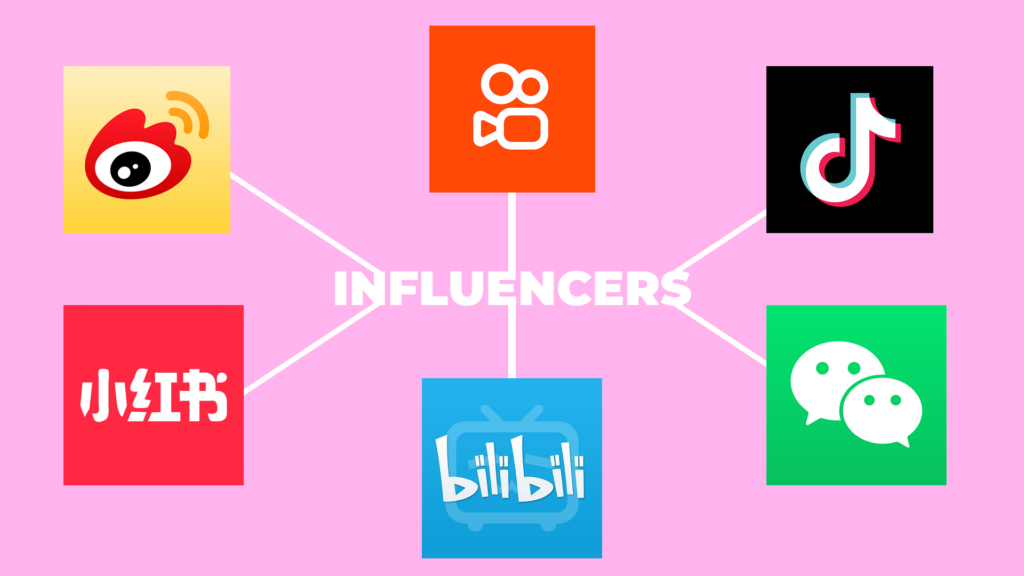
China is a separate digital market. As we move through 2026, the rules of engagement have shifted again. The era of simply hiring a celebrity with millions of followers is fading. Today, success belongs to brands that master the delicate ecosystem of Key Opinion Leaders (KOLs) , Key Opinion Consumers (KOCs) , and emerging Cultural Opinion Leaders (COLs) .
If you are thinking about expanding your business opportunities and have turned your attention to the rapidly developing China, then sooner or later you will encounter such a digital giant as Baidu.

30 / 03 / 2026
Xiaohongshu and Douyin: A Guide for Brands Entering China’s Cross-Border E-Commerce Market
Brands entering China’s cross—border e—commerce market often ask the same question: are Douyin and Xiaohongshu the same?
The Chinese Internet is often compared to a separate universe. It operates by its own rules, features its own platforms, and follows a distinct logic of consumer behaviour. While in the West the path to purchase often begins with Amazon or Google, in China things are both more complex and, at the same time, more structured.
What is Bilibili (哔哩哔哩)? Is Bilibili Like YouTube? Is Bilibili still popular in China? Bilibili vs YouTube: 7 Major Differences You Should Know 1. Market Size and User Base 2. Local Competition 3. Niche Focus 4. Community Building and User Engagement 5. Content Quality 6. Search and Discovery Algorithms […]
Mini Programs menu interface/ Mini Programs of Printer/ Uniqlo Mini Program CASE 1: Swisse (supplements) WeChat Mini Program
This comprehensive Xiaohongshu guide and overview explores the fundamentals of marketing on the platform. Recently, a new term has emerged globally, prompting questions such as what is Rednote app and what is Rednote. To clarify the most popular hesitation, is Rednote Xiaohongshu? Yes, they are the exact same platform. Whether it is referred to as […]
Expanding into the Chinese market can be highly rewarding, but it requires careful planning. By following best practices for digital marketing in China, businesses can save time and resources, potentially conserving tens of thousands of dollars while setting themselves up for a successful market entry. China’s media landscape is governed by strict advertising regulations designed […]
Registering an Account with the Baidu Search Engine Baidu’s Official Website Search Results Page Structure Brand Zone in Baidu
Reserved Advertisement Formats on Bilibili