

More than 800 million people browse Taobao every single month. Most sellers never reach the first page of search results unless they pay for ads. This is a fact.
For international brands, cracking Taobao’s organic search is the difference between hidden inventory that gathers dust and headline sales that generate real revenue. We at MATES ASIA have optimized over 500 Taobao product pages and tested every ranking factor until click through rates and conversions finally soared. This guide contains the exact data backed SEO tactics that lift your products to the top of search results. No ad budget required.
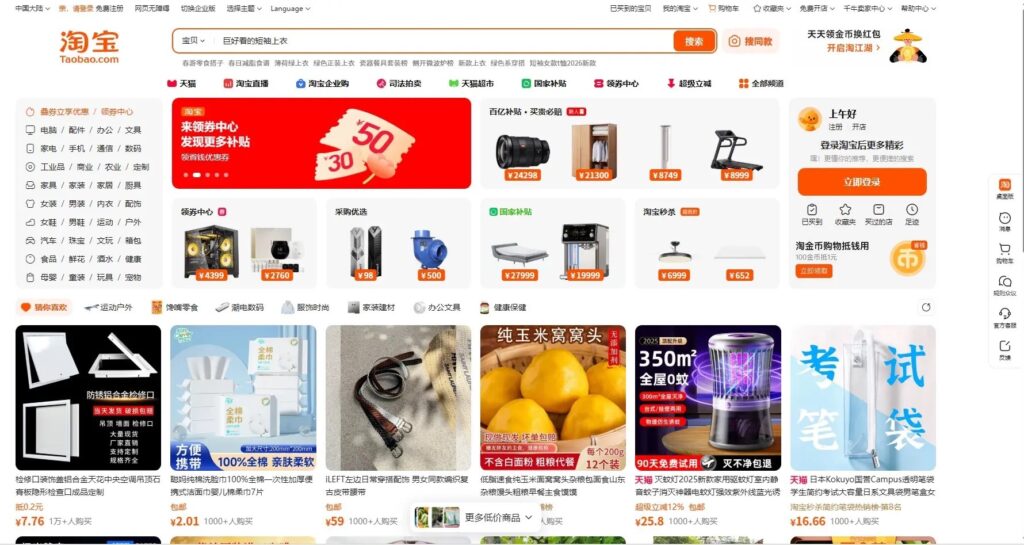
How Taobao’s Algorithm Actually Works
Taobao is not Google. It is not Amazon. It is a unique search engine that prioritizes different signals than Western platforms. Understanding how Chinese search algorithms work is the first step to success in this market.
The algorithm examines four main performance metrics to determine which products appear first when shoppers type in a query. These metrics work together as a scoring system. Listings that perform well across all four categories rise to the top. Listings that ignore any of them sink to page ten and never recover.
The Four Ranking Factors That Matter
Store Level Signals That Boost Everything
Here is something most sellers do not realize. Taobao examines your entire store’s health, not just individual product listings. A weak store drags down every single product you sell.
What the algorithm tracks at store level:
- store rating (maintaining above 4.8 stars significantly boosts organic visibility)
- response time to customer messages
- shipping speed and order fulfillment
- return rate and dispute resolution history
- repeat customer rate and transaction volume
Established stores with steady sales patterns receive preferential treatment in search rankings compared to newer accounts. Building these store level metrics requires patience. But the return on investment becomes substantial once your store gains algorithmic trust.
Keyword Research. Finding What Buyers Actually Search For
Most sellers guess their keywords. This is a mistake that kills organic visibility before the game even starts.
You need to discover what real buyers type into the search bar. Not what you think they should type. Not what sounds good in English and got translated. What they actually use.
Taobao Autocomplete. Your Free Research Tool
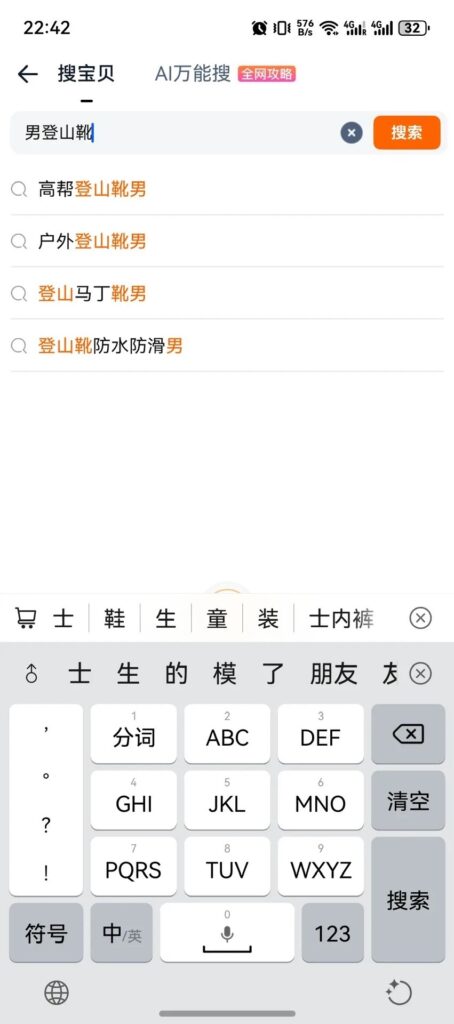
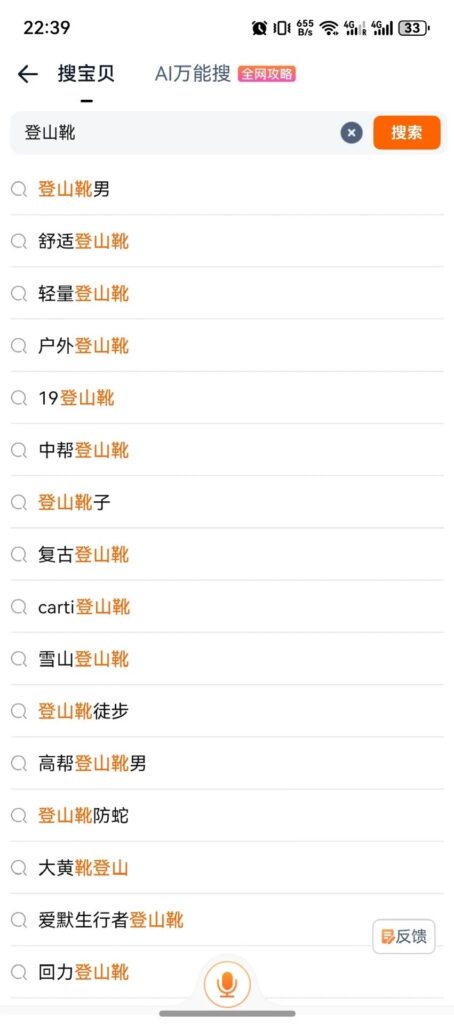
Start typing your main product keyword into Taobao’s search bar. The platform will show you a dropdown list of related phrases that users frequently search for. This data comes directly from actual buyer behavior. It is free. It is accurate. And most sellers ignore it.
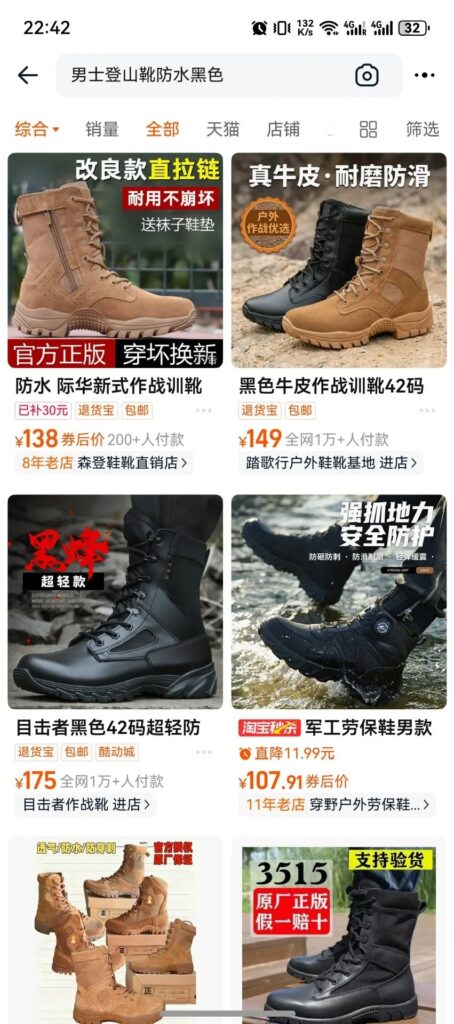
Example: if you sell hiking boots, type «hiking boots» into the search bar. Taobao will show you the most common variations that real shoppers use. Save these terms. They are your seed keywords.
Taobao Index. The Data You Cannot Skip
Taobao Index provides search volume data, trend analysis, and demographic insights for specific keywords. The tool shows you which terms are gaining popularity, seasonal patterns, and even geographic preferences across different regions in China.
This data helps you understand which keywords are worth targeting and which ones will waste your time. Focus on terms with steady or growing search volume. Avoid terms that are declining or have zero trend data.
Competitor Analysis. Steal What Works
Find the top ranking listings in your product category. Study their titles, descriptions, and keyword patterns. Successful sellers reveal valuable insights through their optimization choices.
What to look for in competitor listings:
- which keywords appear in their titles (especially the first 10-15 characters)
- how they structure their bullet points
- what benefits they highlight in descriptions
- what pricing strategy they use
Do not copy them directly. Learn from them. Then do it better.
Long Tail Keywords. Your Shortcut to the Top
Broad keywords like «boots» or «shoes» are impossible to rank for. Every major seller bids on them. The competition is brutal and the conversion rates are low.
Long tail keywords like «waterproof hiking boots size 10 for men» are the opposite. They have less competition. They show clear buyer intent. And according to e-commerce data, searches with three or more words convert significantly better than generic terms.
Product Titles. Your First and Most Important Asset
Your product title is the first thing shoppers see in search results. It is also one of the strongest signals the algorithm uses to understand what you are selling.
A bad title hides your product. A good title attracts clicks. A great title converts browsers into buyers.
Primary Keywords Go First
Search algorithms scan titles from left to right. They give more weight to words that appear early. This means your most important keywords must be placed at the beginning of your title.
Wrong: «Premium Quality Durable Waterproof Hiking Boots Men Size 10 Black»
Right: «Men’s Waterproof Hiking Boots Size 10 Black Premium Quality Durable»
The second version puts the key terms first. Shoppers see exactly what they are looking for within the first few words. The algorithm rewards this clarity.
The 60 Character Limit Is Non Negotiable
Most Taobao shoppers browse on mobile phones. Mobile screens cut off titles that exceed 60 characters. If your title is too long, crucial information disappears and shoppers scroll past without clicking.
Keep your title under 60 characters. Put the most important information first. Save additional details for your product description.
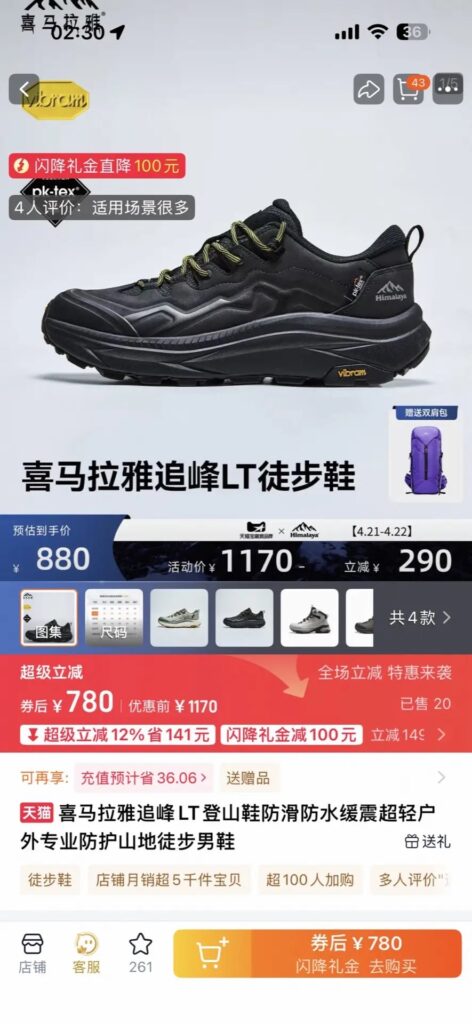
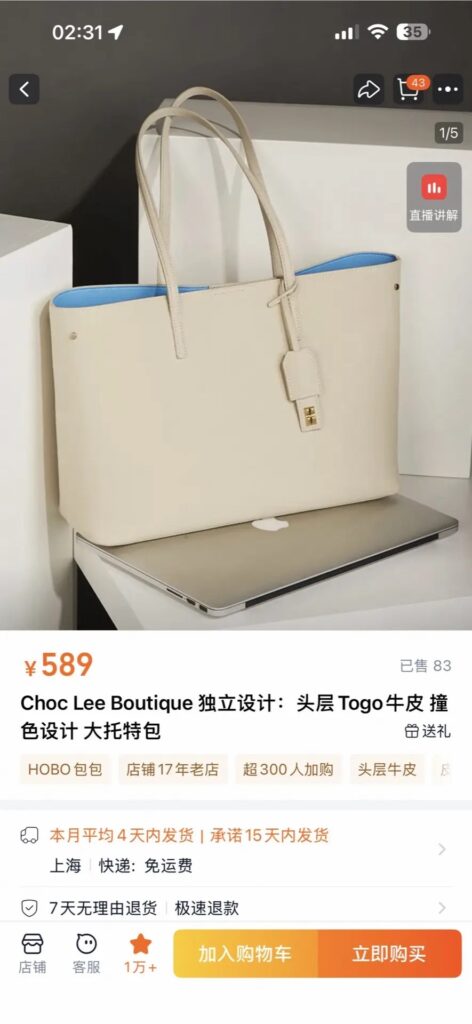
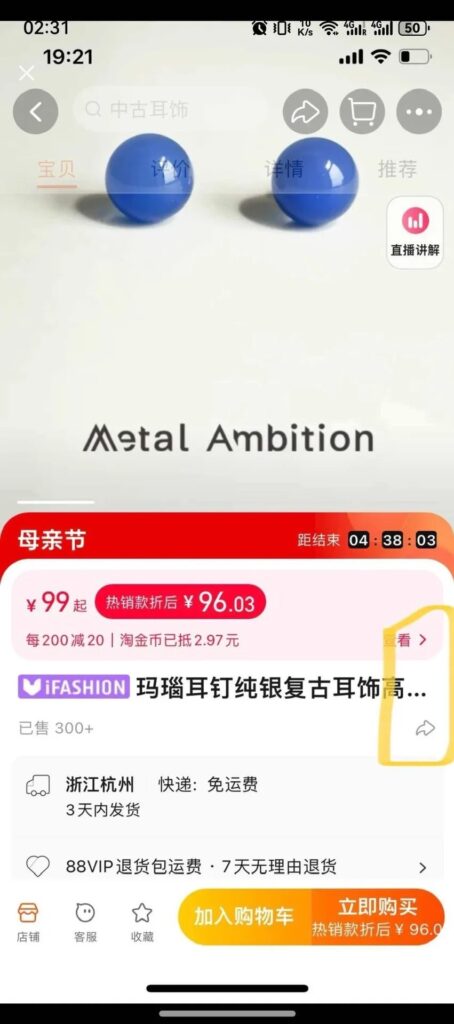
Readable Titles Beat Keyword Stuffing
Cramming every possible keyword into your title destroys conversion rates. Shoppers need to understand what they are buying at first glance. A title that reads like a robot wrote it confuses people and hurts click through rates.
Bad (keyword stuffed): «Boots Hiking Boots Men Boots Waterproof Boots Size 10 Boots Black Boots Outdoor Boots»
Good (readable): «Men’s Waterproof Hiking Boots Size 10 Black Outdoor Trail Shoes»
The second version flows naturally while still hitting key search terms. It works for both the algorithm and real human buyers.
Product Descriptions. Turning Clicks into Sales
Your title brought the shopper to your page. Now your description needs to close the sale.
Taobao product descriptions require a different approach than Western e-commerce platforms. Chinese shoppers expect dense information, visual proof, and clear answers to their concerns.
Product Images. The Silent Conversion Machine
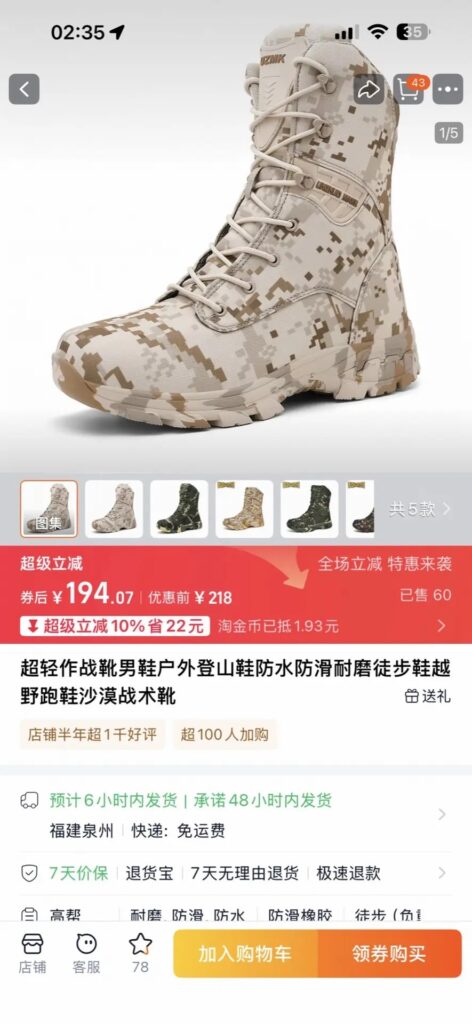
On Taobao, shoppers judge products by their photos before they read a single word. Bad images kill sales. Good images build trust. Great images make shoppers click without hesitation.
High Resolution Thumbnails That Grab Attention
Your main product image appears in search results at thumbnail size. It needs to be clear, bright, and instantly understandable even on a small phone screen.
Requirements for main images:
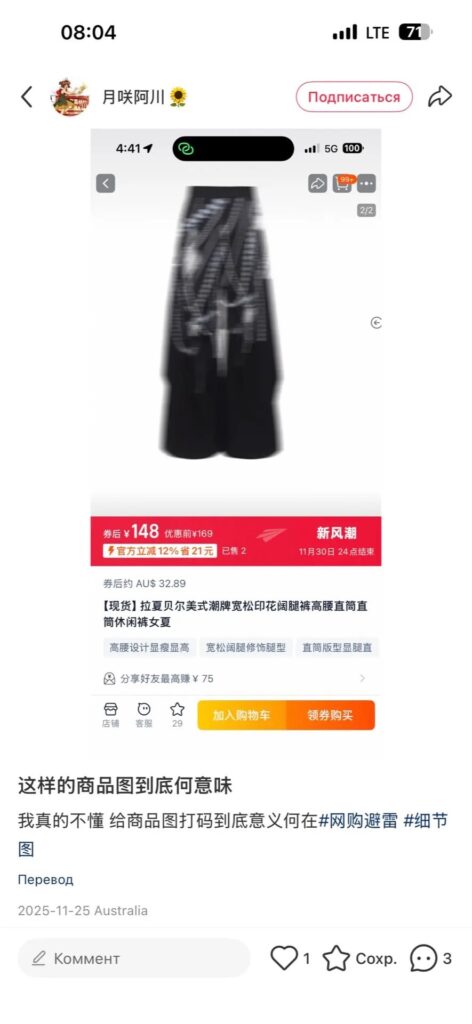
- no watermarks, text, or distracting elements
- clean white or light background
- product centered and filling most of the frame
- high resolution with no pixelation
Multiple product angles provide comprehensive coverage. Shoppers need to see the front, back, side, and top of your product before they feel confident buying.
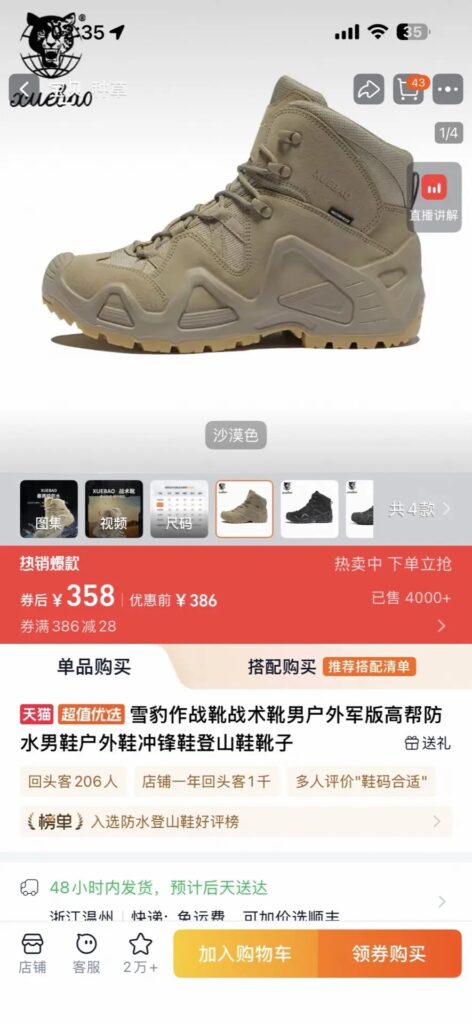
Lifestyle Shots and Detail Photos
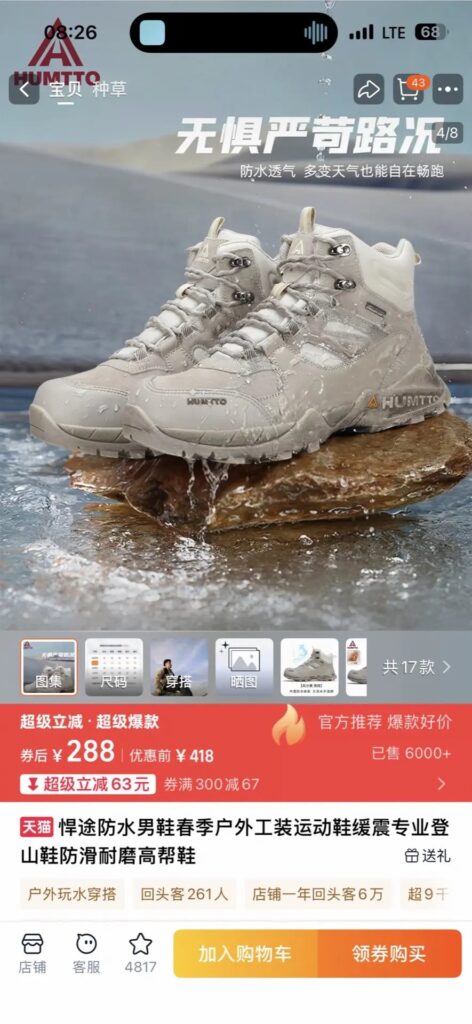
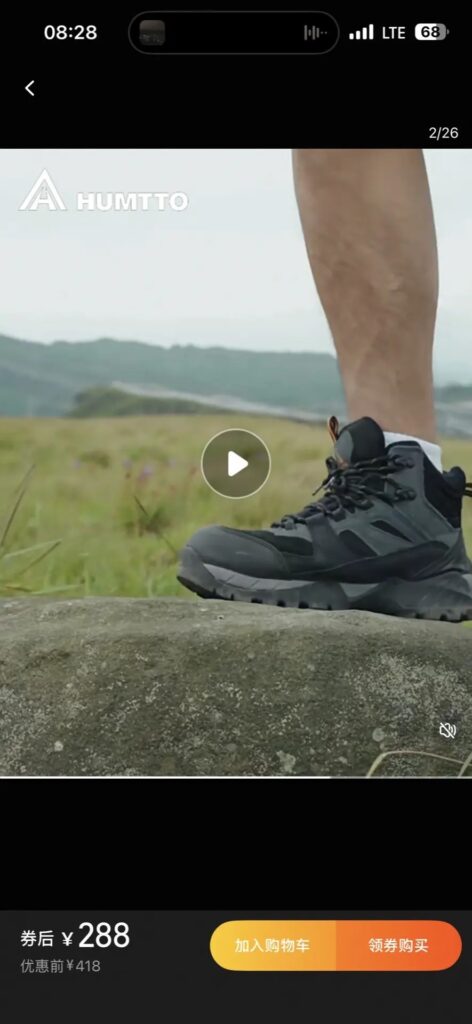
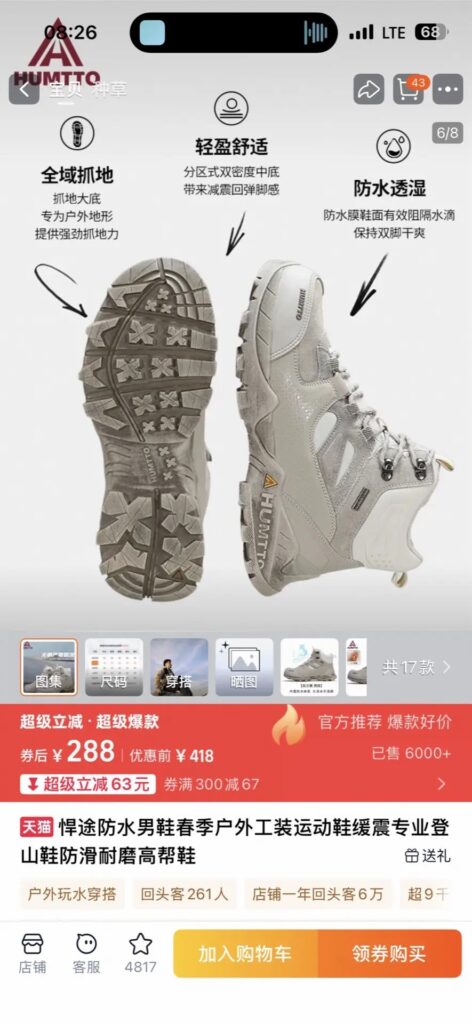
Lifestyle images show your product being used in real situations. A hiking boot on a mountain trail. A backpack on a commuter’s shoulders. A dress at a summer party.
These shots help shoppers imagine themselves using your product. They create emotional connection that specifications alone cannot achieve.
Detail photos highlight quality and craftsmanship. Close up shots reveal materials, stitching, textures, and finish quality. These images answer unspoken questions about durability and build quality.
Alt Text for Search Visibility
Add descriptive alt text to every product image. Include primary keywords where relevant. This helps Taobao’s algorithm understand what your images show, which can improve visibility in image based searches.
Bad alt text: «product photo»
Good alt text: «men’s waterproof hiking boots size 10 black»
Keep descriptions natural. Do not stuff keywords. The goal is to help the algorithm while maintaining useful information for accessibility.
Performance Metrics That Directly Impact Rankings
Taobao’s algorithm watches how shoppers interact with your listings. Good signals push you up. Bad signals push you down. Behavioral factors are just as important on Taobao as they are on Baidu.
Click Through Rate. Getting Shoppers to Click
Your CTR depends almost entirely on your title and main image. If these two elements are weak, nothing else matters because shoppers never reach your page.
To improve CTR:
- ensure your main image is bright, clear, and product focused
- place primary keywords at the start of your title
- use benefit driven language that speaks to buyer needs
- create urgency with words like «limited» or «bestseller» where appropriate
Conversion Rate. Turning Visitors into Buyers
CTR brings shoppers to your page. Conversion rate determines whether they actually buy. The algorithm watches this metric closely because it signals whether your product delivers what the title promised.
To improve conversion rate:
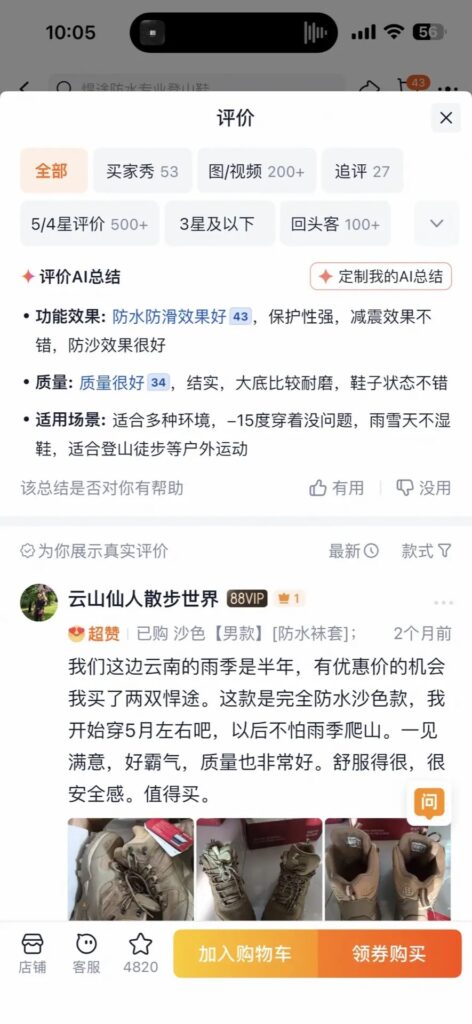
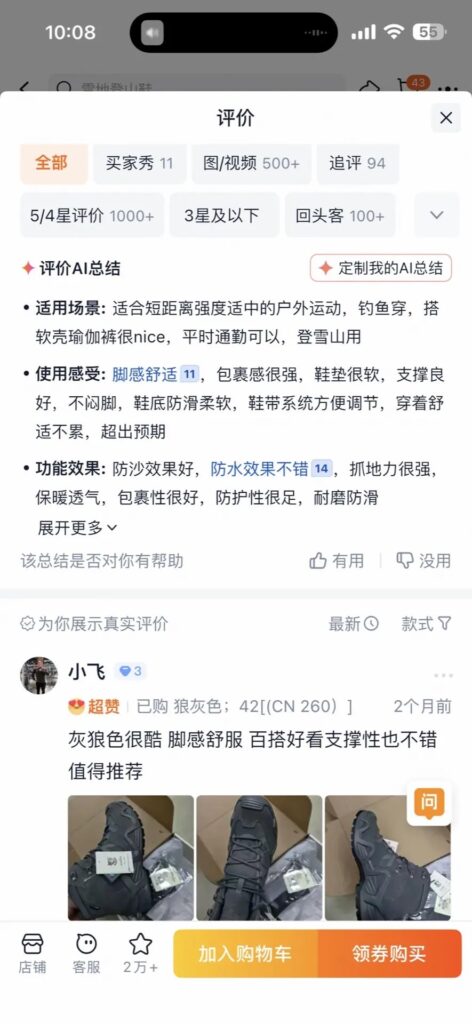
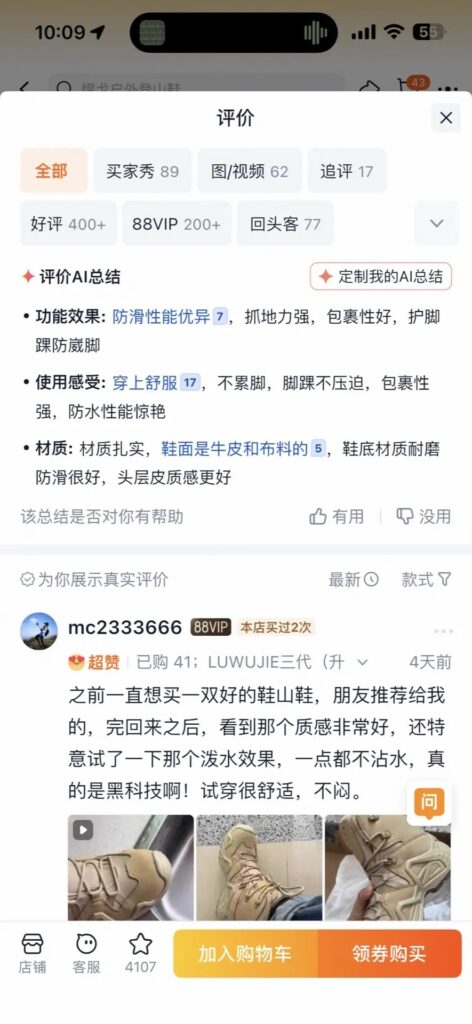
- display customer reviews prominently
- show social proof through user generated photos
- price competitively against similar listings
- offer multiple payment options
- provide clear shipping and return information
Reviews and Repeat Purchases
Customer feedback directly impacts search rankings. Products with consistent positive reviews outperform identical products with few reviews or negative feedback.
We reccomend:
- send follow up messages within 48 hours of delivery
- offer small incentives (discount codes) for honest reviews
- provide simple review templates that buyers can customize
- respond professionally to negative reviews to show you care
Repeat customers signal strong user experience to Taobao’s algorithm. A customer who buys from you once and returns again tells the platform that your store provides real value.
Paid Tools as Research Engines
You do not need to run ads forever. But using Taobao’s paid promotion tool strategically can accelerate your organic SEO efforts significantly.
Drive Initial Traffic to Gather Data
Run short, targeted campaigns to collect performance data that would take months to gather through organic methods alone. The initial traffic surge reveals real user behavior patterns, click through rates, and conversion metrics.
Use this data to identify which keywords, titles, and images perform best. Then apply these insights to your organic listings.
Optimize for ROI, Then Apply Learnings Organically
Start with conservative bids on high intent keywords. Monitor cost per click versus actual sales data. Increase spend only on terms that show strong performance metrics.
The real value comes from analysis. Which keywords drove the highest conversion rates? Which titles generated the most clicks? Which images stopped shoppers from scrolling?
Take these insights and optimize your organic listings accordingly. You are not paying for permanent traffic. You are paying for research that improves every listing you will ever create.
Analyzing Performance and Iterating
Common Mistakes That Kill Organic Visibility
Conclusion
Taobao SEO is not magic. It is a system of clear, repeatable practices that work when you apply them consistently.
Start with keyword research using Taobao Autocomplete and Taobao Index. Optimize your titles with primary keywords first, keep them under 60 characters, and make them readable. Write descriptions that address buyer pain points and include rich media. Use high quality images with multiple angles and lifestyle shots.
Monitor your performance metrics. Encourage reviews. Test everything. Adjust for seasonal trends.
And most importantly, avoid the common mistakes that kill organic visibility. Irrelevant keywords, misleading images, ignoring mobile optimization, and poor customer service will destroy your rankings regardless of how well you execute everything else.
These strategies work best when you apply them consistently, track your results through analytics, and adjust based on real performance data.
FAQ
Taobao’s algorithm is fast, but it isn’t instantaneous. Generally, you’ll start seeing shifts in your organic ranking and traffic within 2 to 4 weeks. The system needs time to index your new keywords and, more importantly, to track how users interact with your updated listing.
It’s a risky shortcut. Direct translations often miss local slang, shopping nuances, and specific technical terms used by Chinese consumers. To rank effectively, always use Taobao Autocomplete and Taobao Index to find the exact phrases your target audience is typing into the search bar.
Absolutely. Taobao prioritizes a good user experience. If your store has a high rate of disputes, slow response times, or poor shipping ratings, the algorithm will «punish» your visibility. You can have a perfect title, but poor service metrics will act as a ceiling on your organic growth.
While you have a 60-character limit (30 Chinese characters), quality beats quantity. Focus on making the first 10-15 characters highly relevant, as these carry the most weight and are the most visible on mobile screens. If you find yourself adding «filler» words just to hit the limit, stop — irrelevant keywords will only hurt your conversion rate.