
If you want to grow sales in China, Tmall is often not just “another channel”, but the core revenue engine inside Alibaba’s ecosystem. Shoppers come to Tmall with clear purchase intent, search for specific brands or categories, compare options, and convert directly on the platform. That makes your Tmall marketing strategy a mix of brand building, conversion optimization, and performance advertising rather than simple “store listing”.

Below is a full, factual overview of how Tmall marketing and advertising actually work today, written in a clear, practical style.

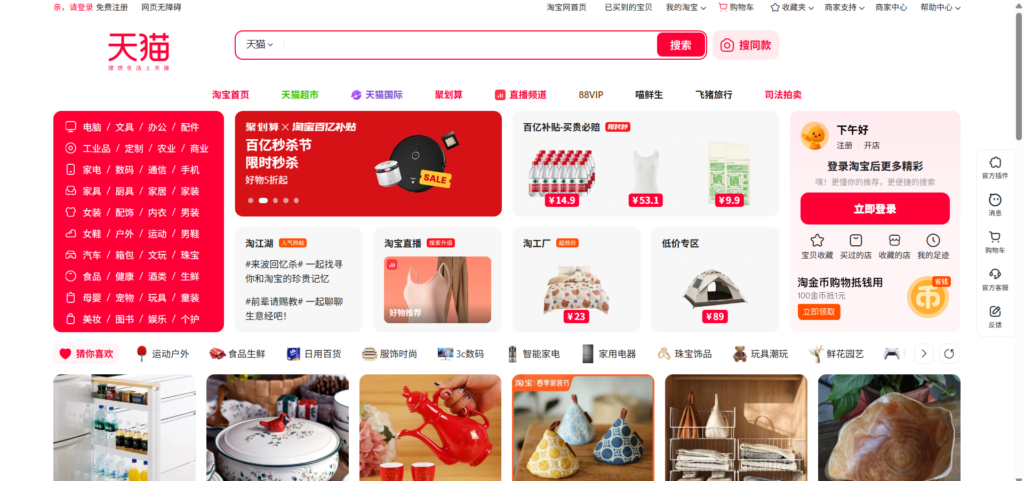
What Is Tmall and How Does It Work for Brands

Tmall is Alibaba’s flagship B2C marketplace, allowing both Chinese and international brands to sell directly to consumers in mainland China and selected regions. Tmall Global is the cross‑border version targeting foreign brands that operate from outside mainland China while still accessing Chinese consumers.

Tmall stores function like branded flagships: brands control product listings, design, merchandising, and promotions within the Alibaba ecosystem, while Tmall provides traffic, search, and integrated marketing tools. For most brands, success on Tmall depends on three pillars: store foundation (UX, content, service), on‑platform advertising, and participation in platform‑wide promotions.
Why Tmall Matters in Your China Funnel

Tmall’s audience is made up of digitally savvy, urban consumers who are comfortable with online payments and often willing to pay for branded products rather than pure lowest price. These users usually reach Tmall in the mid‑to‑lower funnel: they already know the category or brand and are actively evaluating options and promotions.

Because Tmall sits so close to the purchase decision, its marketing tools are designed to drive measurable sales, not just awareness. Brands that treat Tmall as a passive catalogue tend to underperform, whereas those that view it as an active marketing ecosystem – with its own content, ads, and loyalty – see higher ROI and long‑term growth.

Core Benefits of Tmall Marketing

Tmall marketing brings together broad reach, strong purchase intent, and clear performance data, giving brands a level of measurability that most other Chinese ecommerce platforms cannot offer.

In practice, this means Tmall is not only a sales channel but also a key environment for price positioning, product launches, and ongoing customer relationships.

  • Direct impact on revenue

    A large share of Tmall ad inventory is pay‑for‑performance (PPC/P4P), and even display formats are usually managed with strict ROI targets, so brands can track impressions, clicks, conversions and revenue in detail.

  • Advanced targeting and data

    Tmall allows brands to combine keyword‑based search ads with audience targeting built from on‑platform behaviour (store visits, product views, carts, purchases) and basic demographic or interest signals, which supports both precise prospecting and retargeting.

  • High trust and brand legitimacy

    For Chinese consumers, an official Tmall or Tmall Global flagship is a strong signal that the brand is authentic and offers dependable service, particularly in beauty, electronics, and other premium categories.

  • Deep integration with major shopping festivals

    Events like Double 11 (11.11), 6.18 and 12.12 are some of the largest online shopping campaigns in China, and Tmall heavily concentrates traffic, discounts and ad inventory around these dates, making them critical moments for brand performance on the platform.

Key Tmall Advertising Formats and Tools

After the store foundation is set, performance on Tmall largely depends on how you use the platform’s paid traffic options. The ad environment offers many different formats and placements, but most brands rely on a few core tools that drive the bulk of results:

Keyword Ads (Search P4P / Zhitongche直通车)
Keyword ads appear in Tmall’s search results when users enter specific queries, such as a brand name or a generic term in your category. Brands bid on these keywords in a competitive auction, so higher and more relevant bids usually receive better visibility, similar to Google Ads. Zhitongche also allows targeting users who have visited the store, viewed products or added items to cart, and lets brands adjust bids for specific user segments, making it useful for both acquisition and retargeting.
Display and Recommendation Ads
Tmall offers display inventory across key surfaces, including the homepage, category pages and recommendation feeds that appear as users browse through the platform. These banner and native units are managed via Alibaba’s ad systems and are often used to quickly increase reach for new product launches, large campaigns or shopping festivals. Because they reach users who are already in a shopping mindset, they can be an effective way to introduce a brand or push a hero SKU before users even start searching.
Brand Zones and Store Branding Units
Brands can reserve dedicated visual areas around search results or category pages to showcase their logo, flagship store, hero products and current campaigns in one block. When a user searches for a brand or category, these units help steer them towards the official flagship instead of third‑party resellers and give the brand more control over what a shopper sees first. For established brands, this acts like a branded “front door” to the Tmall presence, reinforcing recognition and consistency.
Promotional Tools and Coupons
Tmall provides a broad set of promotion tools inside the platform: store‑level coupons, cross‑store discounts during festivals, “red envelope” style vouchers, membership perks and benefits linked to programmes like 88VIP. These mechanics show up directly on product and cart pages, making the value of the offer easy to understand at the moment of decision. Used properly, they help lift conversion rates, encourage basket building and reward users who come back to the flagship store regularly.

Livestreaming and influencer‑driven commerce

Beyond classic search and display ads, there is one more traffic channel brands cannot afford to ignore on Tmall: livestreaming. For many categories, especially beauty, fashion and consumer electronics, live commerce has become a core way to show products in context and close sales on the spot.

Through Taobao Live and embedded video formats, brands can run live sessions, tutorials and product demonstrations that link directly to their Tmall listings. Viewers can ask questions in real time, see how a product actually works and purchase without leaving the stream, which makes livestreaming a powerful tool for launches, campaign peaks and shopping festivals. Influencer collaborations add another layer: KOLs and KOCs bring their own audiences into the session, but the traffic and orders still land in the brand’s official Tmall flagship.

How to Build a Tmall Advertising Strategy

1. Define the Role of Tmall in Your China Portfolio
The first step is to decide how Tmall fits into your overall China plan: main revenue driver, premium flagship, channel for new launches, or a hub complemented by other platforms such as Douyin and RedNote. This decision influences budget, product assortment, and expectations for profitability vs. growth. For many international brands, Tmall or Tmall Global functions as the central ecommerce flagship, while social channels provide traffic, storytelling, and pre‑purchase education.
2. Analyse Search, Category, and Competitor Behaviour
Before investing heavily in ads, it is essential to analyse which keywords drive traffic and sales in your category, how leading stores structure their product pages, promotions, and content. Moreover, it is necessary to define what price points and discount levels dominate the space. Brands commonly use third‑party Tmall analytics tools to estimate competitor traffic and advertising budgets, then set realistic benchmarks for their own spending and ROI.
3. Build and Optimize Your Store and Listings
Once you understand the category and your competitors, the next step is to make sure your own store can turn traffic into real demand. On Tmall, this mainly comes down to how well your product pages are structured, how clearly they explain the offer, and whether visitors see a concrete reason to buy.
4. Launch Test Campaigns and Refine Budget
At this stage, the goal is not to buy as much traffic as possible, but to learn how the market responds to your brand and offers. A good starting point is a small set of focused test campaigns rather than a full rollout across all categories. Most brands begin by promoting a limited number of core categories and proven best‑selling products, so early results reflect real potential instead of noise from weak SKUs. Once the first campaigns are live, performance data becomes the main guide. Instead of looking only at total spend or sales, it is important to track click‑through rate, cost per click, conversion rate, cost per acquisition and return on ad spend. Together, these signals show which combinations of keywords, creatives and products are actually working and which are simply consuming budget. The next step is to act on these differences by shifting budget. Strong campaigns and placements can be scaled gradually, while weak segments are cut back, paused or reworked instead of being left to drain spend. In practice, this often means narrowing focus to fewer, better‑performing campaigns and then increasing bids or daily caps where the data supports it.
5. Integrate with Major Shopping Festivals
On Tmall, major shopping festivals are not just seasonal sales events. They are some of the most important growth moments of the year. Campaigns such as Double 11, 6.18, 12.12 and Chinese New Year can bring a huge concentration of traffic, but they also create intense competition. If your brand wants to benefit from these moments, you need to prepare long before the event starts. A strong festival strategy usually begins several months in advance. You need to decide which products will be your hero SKUs, prepare bundles and discounts, improve product pages, test ad creatives and start building store followers before the main campaign period. This early preparation matters because festival traffic is expensive and highly competitive. If your store, inventory or offer is not ready, even a large ad budget can be wasted. During the campaign itself, your Tmall advertising should work together with your promotions, not separately from them. Search ads can help you capture users who are already looking for your category or brand. Display and recommendation ads can increase visibility for key products. Livestreams, coupons, limited-time offers and bundles can help you convert users who are comparing several stores at the same time. The goal is not only to create a short-term sales spike. A well-planned festival campaign can also help your brand gain new followers, collect more product reviews, build stronger store data and create larger retargeting audiences for future campaigns. In this sense, Tmall shopping festivals should be part of your annual marketing strategy, not treated as one-off discount days.
Expert Opinion
Anastasia
CEO of Mates Asia

Tmall advertising works best when the store is already ready to convert. Many brands focus too early on traffic, but the real question is what happens after the click. If the product page is weak, the offer is unclear, or users do not trust the store yet, paid ads will only make these problems more expensive.

Off‑Platform Traffic and Tmall Integration

Relying only on traffic inside Tmall can make growth difficult, especially if your category is competitive or your brand is still new to Chinese consumers. Users may not search for your brand on Tmall if they have never heard of it before. That is why your Tmall strategy should also include traffic from outside the platform.

Social media and Tmall should not work as separate channels. They should work as one connected journey. A user may first discover your product through Douyin, RedNote, WeChat, Weibo or KOL/KOC content. At this stage, they become familiar with the product, understand its value and start to recognize your brand.

Later, when the same user enters Tmall and sees your product in search results, recommendations or display ads the product no longer feels unfamiliar. They have already seen it before, so the Tmall ad or product listing has a stronger chance of turning attention into a purchase.

In this way, external content builds awareness and trust, while Tmall captures demand when the user is ready to compare options, check reviews, use promotions and buy.

Common Mistakes to Avoid on Tmall

Tmall can become a powerful sales channel, but only if your strategy is built correctly from the start. Many international companies lose budget not because the platform does not work, but because they enter it without enough preparation, localization or operational control.

Focusing only on sales volume
High GMV can look impressive, but it does not always mean healthy growth. If you rely too heavily on discounts, coupons and paid traffic without calculating commissions, logistics, platform fees and ad costs, your campaign may generate revenue while damaging margins.
Sending paid traffic to weak product pages
Even strong advertising cannot fix a poor product page. If your visuals are weak, descriptions are too thin, reviews are limited or the offer is unclear, users may click but not buy. Before scaling ads, make sure your product listings explain the value clearly, answer common objections and make the purchase decision easy.
Treating Tmall as a one-time setup
Opening a Tmall store is only the beginning. Your ads, product pages, pricing, reviews, promotions and festival campaigns need continuous optimization. Competitors change their offers, search demand shifts, and platform mechanics evolve. If you stop adjusting, performance usually declines over time.
Ignoring local platform expertise
Tmall has its own backend logic, advertising tools, campaign rules and operational requirements. For foreign brands, it can be difficult to manage everything without a local team or an experienced Tmall Partner. Local expertise helps you avoid technical mistakes, choose the right promotion tools and understand how Chinese consumers actually compare products before buying. This is where working with the right local partner becomes especially important. At Mates Asia, our China-focused team helps international brands understand how the platform works in practice, choose the right promotion channels, adapt content for Chinese consumers and build a realistic advertising strategy for Tmall and Tmall Global. Instead of treating Tmall as just another marketplace, we help you turn it into a structured sales and marketing channel for the Chinese market.

FAQ

How much does Tmall advertising cost?

There is no fixed universal budget. Your spend depends on your category, competition level, campaign goals, product price, shopping festival calendar and whether you use search ads, display placements, livestreaming or broader Alimama tools. A practical approach is to start with focused test campaigns, measure ROI carefully and scale the formats that bring qualified traffic and sales.

What is the best Tmall advertising format to start with?

For many brands, Search P4P / Zhitongche is a logical starting point because it targets users who are already searching for a product, category or brand. Once you understand which products and keywords convert, you can expand into display, recommendation ads, livestreaming and festival campaigns.

How long does it take to see results from Tmall marketing?

You may see early traffic and sales data shortly after launching ads, but building a strong Tmall presence takes longer. Product reviews, store followers, search visibility, campaign performance and festival readiness all improve over time. For most brands, Tmall should be planned as a long-term ecommerce channel, not a one-month experiment.

Leave a comment

    Thank you!
    Your comment will be published after being moderated.